Transverse vibration and thermal cycling are the leading causes of fastener self-loosening. When extreme dynamic forces act on a bolted joint, they cause microscopic lateral movements. These tiny shifts eventually lead to catastrophic equipment failure, costly manufacturing downtime, and severe compliance risks. Standard nuts and split washers often fail completely under such dynamic loads. Because of this reality, engineers typically narrow their design choices down to two highly reliable categories. You either choose chemical retention using a threadlocker or mechanical retention.
This article provides an unbiased, engineering-focused evaluation of the Loctite vs lock nut debate. We will help procurement teams and mechanical designers select the most reliable, cost-effective method for specific applications. You will learn how operating temperature limits, intense vibration resistance requirements, and production line speeds dictate your final selection.
Key Takeaways
Loctite (Threadlockers): Best for tapped blind holes, weight-sensitive assemblies, and sealing threads against corrosion. Requires curing time and clean surfaces.
Nylon Lock Nuts: Ideal for rapid assembly and low-temperature environments where vibration is present but curing time cannot be accommodated.
All-Metal Lock Nuts: The ultimate choice for extreme temperature environments and heavy-duty structural joints where chemical degradation or nylon melting is a risk.
The Golden Rule: Chemical and mechanical methods do not strictly compete; their selection depends entirely on temperature limits, reusability needs, and production line speed.
Solution Categories: Chemical vs. Mechanical Retention
Chemical Retention (Threadlocker / Loctite)
Chemical retention involves applying liquid anaerobic adhesives directly to fastener threads. They cure only in the strict absence of air. This chemical reaction occurs when you confine the liquid between active metal surfaces. The process forms a rigid thermoset plastic. It completely fills all microscopic gaps between the male and female threads. The resulting hardened plastic locks the entire assembly firmly in place.
Manufacturers offer several variations. These distinct formulas match different shear strength requirements. Low-strength chemical options usually come in purple. They suit small precision fasteners requiring frequent adjustment. Medium-strength formulas are typically blue. You can reliably remove them using standard hand tools. High-strength versions are red. They offer permanent locking capabilities. You must apply localized heat above 500°F to break the bond and disassemble them.
Mechanical Retention (Lock Nuts)
Mechanical retention relies on physical interference to prevent self-loosening. Engineers categorize these fasteners primarily by their specific locking mechanism. They require no curing time.
A nylon lock nut uses a captive, undersized polymer collar. As you drive the bolt through it, the bolt threads physically deform the nylon ring. This intense action creates prevailing torque via high friction. It forcefully resists backing off even under constant vibration.
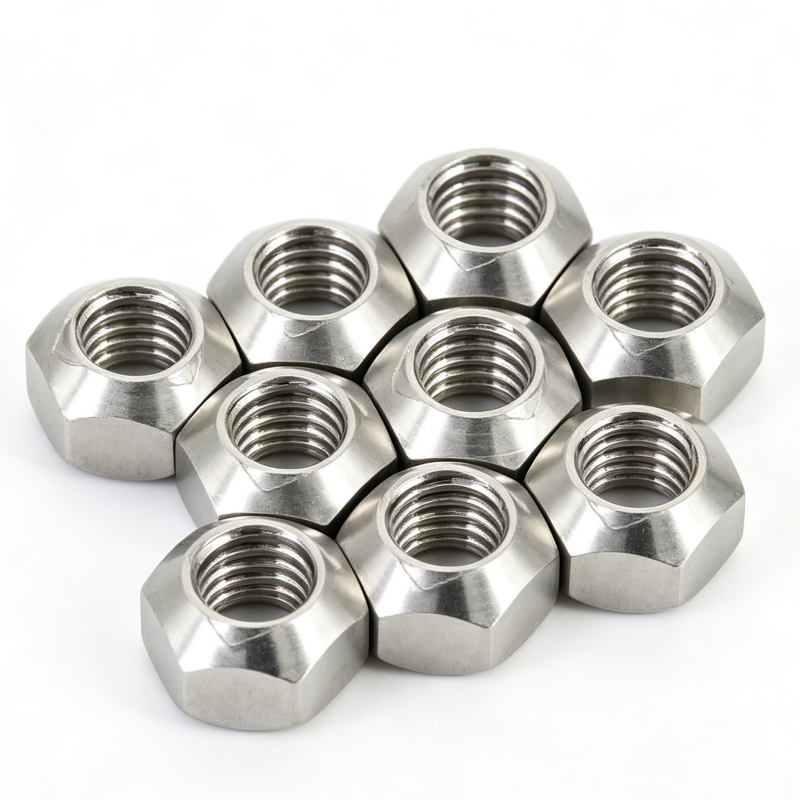
Alternatively, an all-metal lock nut relies on distorted threads or specialized internal geometry. These rugged designs create deliberate mechanical interference against the bolt. They produce incredibly high prevailing torque. They achieve this without relying on heat-sensitive plastics.
Head-to-Head Evaluation Dimensions
Temperature Resistance & Thermal Cycling
Temperature limits strictly dictate your fastening choices. Extreme environments quickly narrow down your viable options. All-metal fasteners excel in blistering heat. Engineers routinely specify them for heavy exhaust systems and hot turbine engines. Many rugged variants easily withstand continuous temperatures exceeding 1000°F.
In sharp contrast, nylon inserts fail quickly under heat. The polymer melts and loses all prevailing torque at roughly 250°F (120°C). Standard liquid chemicals also degrade rapidly at high temperatures. Most basic formulas break down and turn to powder around 300°F (150°C). However, you can source specialized high-temp chemical formulations. These advanced versions are rated up to 650°F.
Vibration Mitigation (Junker Test / DIN 65151 Standards)
Industry-standard Junker transverse vibration tests (DIN 65151) reveal critical performance differences. A proper Junker test subjects joints to severe lateral movement. Engineers use it to accurately measure clamp load loss over time.
Liquid adhesives perform exceptionally well during these rigorous tests. They completely fill thread clearances upon curing. This solid plastic barrier prevents the initial lateral movement responsible for loosening. Mechanical variants also perform strongly by maintaining their prevailing torque. They prevent total joint separation effectively. However, under severe transverse vibration, mechanical designs may still allow a slight loss of clamp load. Chemical locking methods generally hold clamp load better under pure lateral stress.
Maintenance & Reusability
Reusability heavily impacts your long-term maintenance strategy. Engineers actively debate nylon insert reusability. Strict best practice dictates replacing them after a single use. The nylon collar permanently deforms upon initial installation. Discarding them increases your long-term maintenance inventory. However, it absolutely ensures joint safety.
All-metal variants present a different operational challenge. They carry a very high risk of thread galling upon disassembly. This friction welding risk spikes significantly when using stainless steel hardware.
Chemical compounds require intense mechanical force (for blue) or localized heat (for red) during removal. Field mechanics must meticulously clean and chase threads before reapplication. This manual cleaning process slows down field maintenance significantly.
Implementation Realities and Assembly Risks
Production Line Speed vs. Curing Time
Assembly speed dictates fastening choices in high-volume manufacturing environments. Mechanical options provide immediate, full-strength clamp load. As soon as operators torque the hardware down, the joint is fully secured. It is immediately ready for dynamic stress testing.
Chemical compounds demand considerable patience. They generally require 10 to 20 minutes of initial fixture time. Achieving a full chemical cure can easily take up to 24 hours. This mandatory curing window can severely bottleneck immediate stress-testing protocols. Production managers often reject chemical methods on fast-paced assembly lines for this very reason.
The Cleanliness Assumption
You must account for the harsh reality of field conditions. Liquid adhesives require impeccably clean, dry, and oil-free threads. They simply will not cure properly otherwise. Contamination from cutting oils, anti-seize, or grease causes catastrophic chemical failure. The adhesive remains liquid instead of forming a solid thermoset plastic.
Mechanical alternatives are largely unaffected by surface contamination. They provide reliable locking force even covered in thick oil.
Best Practice: Always run a fresh torque-tension test on your specific joint when switching from a standard mechanical setup to a chemical lock.
Common Mistake: Applying permanent red adhesive to a fastener requiring routine monthly maintenance. You will destroy the hardware trying to service it.
Torque-Tension Relationship Alterations
Liquid chemicals act as a powerful lubricant during the initial fastening process. Engineers must carefully adjust their torque specifications downward. Often, you need to reduce applied torque by roughly 20%. Failing to adjust this value can lead to severe over-tensioning. You might easily snap the bolt.
Conversely, prevailing torque designs behave quite differently. They require additional torque just to overcome the friction of the locking mechanism itself. You must firmly factor in this physical drag before the bolt even begins to stretch.
Cost at Scale: Part Price vs. Total Applied Cost
Inventory vs. Application
Evaluating hardware expenses requires looking well beyond the single piece price. You must consider scale. A single bottle of liquid adhesive covers hundreds of individual fasteners. This dramatically reduces physical warehouse inventory. It also helps standardize the Bill of Materials (BOM) across different global product lines.
Mechanical options require stocking multiple specific sizes. You need a different SKU for every bolt diameter. This reality immediately increases your overall SKU counts. It demands far more physical storage space in the facility.
Labor Costs
You must weigh manual labor time very carefully. Dispensing chemical drops takes precision and time. Technicians must carefully apply the exact right amount. They must wipe away inevitable liquid spills. They must also prep and aggressively clean the threads beforehand.
In contrast, operators can use automated robotic tools. They can also use rapid manual drivers to spin down a mechanical nut instantly. This mechanical approach often yields significantly faster cycle times per joint on the assembly line.
Decision Matrix: Shortlisting Your Anti-Loosening Method
Use this quick shortlisting framework to guide your vital engineering choices:
Choose a Threadlocker if: You are threading into a tapped blind hole where nuts are physically impossible. You should also choose this if weight or space is strictly limited. It is also ideal if you need to seal the joint against moisture and external corrosion.
Choose a Nylon Lock Nut if: Operating temperatures remain safely under 250°F. Select this when you require immediate joint loading. Use it when surface cleanliness cannot be guaranteed, and you want a fast, one-step assembly process.
Choose an All-Metal Lock Nut if: The application involves extreme high heat. This includes heavy engines and exhaust systems. They are also ideal when harsh environmental conditions would rapidly degrade chemicals. Choose them when you require permanent structural integrity.
Anti-Loosening Methods Comparison Table
Feature
Chemical Adhesives
Polymer Insert Fasteners
All-Metal Designs
Max Temperature Limit
Up to 300°F (650°F for special)
Up to 250°F
1000°F+
Cure Time Required
Yes (Up to 24 hours)
No (Immediate locking)
No (Immediate locking)
Thread Sealing Ability
Excellent
Poor
Poor
Vibration Resistance
Superior
High
High
Sensitivity to Oil
Extremely High
Low
Low
Next Steps
We strongly recommend running application-specific Junker tests before mass production. Consult directly with a dedicated fastener engineer before finalizing your BOM. You need hard empirical data. You must prove your chosen method can actually handle your exact operational conditions. Here are four vital steps to take right now:
Identify your absolute maximum operating temperature during peak loads.
Assess your production line speed requirements and acceptable bottlenecks.
Determine the strict required frequency of field disassembly.
Test sample joints extensively under expected transverse vibration.
The long-standing debate around these industrial solutions is not about one being objectively superior to the other. Instead, true engineering success lies in perfectly matching the retention mechanism to the specific environmental realities of your assembly. Chemicals excel in blind holes and pristine manufacturing environments. Mechanical hardware shines in extreme temperatures and fast-paced, heavy-duty applications.
Carefully evaluate your temperature parameters. Review your maintenance schedules and assembly line capabilities. Direct your pressing technical questions to our engineering support team for a comprehensive joint-evaluation consultation. Check our digital catalog and detailed spec sheets. You will easily find the precise locking hardware and chemical locking compounds required for your next critical project.
FAQ
Q: Can I use Loctite and a lock nut together?
A: It is generally unnecessary and highly redundant. The nylon ring can severely interfere with the anaerobic curing process of the liquid adhesive. Furthermore, combining an all-metal locking design with high-strength chemicals makes disassembly virtually impossible. You will likely destroy the hardware trying to take it apart.
Q: Are nylon lock nuts reusable?
A: Strictly speaking, no. The captive nylon collar permanently deforms over the bolt threads upon initial installation. Aviation and critical structural standards explicitly mandate replacing them after just one use. This guarantees reliable prevailing torque and uncompromising joint safety.
Q: Do split lock washers work better than Loctite?
A: No. Modern engineering consensus, firmly backed by rigorous Junker tests, shows standard split ring washers are completely ineffective against severe transverse vibration. Chemical adhesives or prevailing torque nuts are vastly superior for permanently securing dynamic loads.