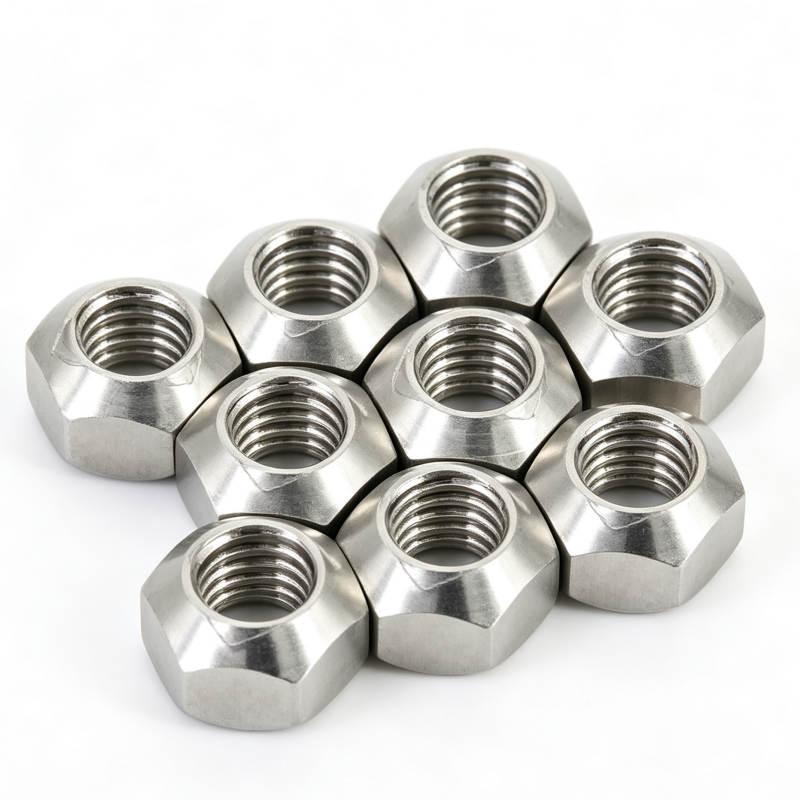
Unplanned fastener loosening due to transverse vibration, thermal cycling, or dynamic loads leads to catastrophic joint failure and costly maintenance. Engineers and maintenance teams face constant battles against these harsh dynamic forces in the field. The baseline reality remains stark. Standard free-spinning nuts often fail to maintain clamp load in high-vibration environments. Even when assembly teams pair them with traditional split-ring washers or serrated flanges, these standard joints still carry a high risk of dangerous back-off.
We must transition to a more reliable, engineered approach. Industry experts recognize the prevailing torque nut as the primary standard solution for securing high-risk joints. These specialized fasteners lock firmly onto the mating threads, offering unparalleled security for critical applications. This comprehensive guide covers the core mechanics, categorical differences, evaluation criteria, and implementation risks. You will learn exactly how these components work, the physics behind their locking ability, and how to properly deploy them across your toughest assembly challenges.
Key Takeaways
A prevailing torque nut is designed with a built-in interference fit that generates friction against the mating bolt, preventing back-off even when clamp load is lost.
The two primary categories are non-metallic (nylon) insert nuts and all-metal lock nuts.
Selection hinges on operating temperature, required reusability, and torque-tension predictability.
Implementation requires adjusting tightening protocols to account for the friction generated during run-down (prevailing torque) to achieve the correct final clamp load.
The Mechanics: What Is a Prevailing Torque Nut?
Many procurement teams and junior engineers ask exactly what is a prevailing torque nut when designing a new structural joint. By definition, it is a highly specialized fastener engineered to resist rotation during both assembly and disassembly. Unlike standard free-spinning nuts, you cannot thread this fastener down a bolt by hand. It requires a wrench or power driver for the entire run-down process. This constant resistance stems from a deliberate structural interference built into the nut.
Prevailing Torque vs. Clamping Torque
To fully understand the mechanics, we must separate two distinct forces at play during installation. Prevailing torque represents the baseline resistance generated by the thread interference. You measure this force before the nut actually contacts the bearing surface of the joint. It is purely the friction required to force the nut down the bolt threads.
Clamping torque, on the other hand, represents the additional rotational force required to stretch the mating bolt. This stretch creates the actual joint clamping force holding your components together. When you install these specialized fasteners, the tool must overcome the prevailing friction first, and then apply the final clamping force to secure the joint.
The "Why": A Reliable Fail-Safe
You might wonder why engineers intentionally introduce assembly friction. This continuous friction acts as an ultimate fail-safe mechanism. Standard joints rely entirely on bolt tension to maintain friction between the threads. If joint relaxation occurs because of gasket creep, thermal expansion, or material settlement, a standard nut loses its tension. It will rapidly vibrate off the bolt.
Because prevailing torque fasteners maintain an independent, constant grip on the bolt threads, they survive clamp load loss. Even if the joint relaxes entirely, the nut remains locked in its position on the bolt. It will not vibrate off, effectively preventing catastrophic disassembly in the field.
Primary Solution Categories: Insert vs. All-Metal Lock Nuts
The market primarily divides these fasteners into two distinct categories based on how they generate thread interference. Understanding the mechanical differences helps you specify the correct fastener for your specific environment.
Non-Metallic Insert Nuts (Nyloc / Nylon-Insert)
The non-metallic insert nut, commonly called a Nyloc nut, represents the most ubiquitous variation. It features a captive, undersized polymer ring housed at the top of the nut. As you thread the bolt through the nut, the steel threads cut into this nylon ring. The polymer plastically deforms around the bolt threads, creating a tight, compressive friction grip.
This design offers several distinct advantages. The nylon insert provides excellent sealing properties against moisture and debris. It dampens transverse vibration remarkably well. Furthermore, the soft polymer remains less abrasive on the mating bolt threads, reducing the risk of installation damage. However, you must carefully observe its strict temperature limits. Most nylon inserts degrade, melt, or lose their elastic memory past 250°F (121°C), rendering their locking feature useless.
The All-Metal Lock Nut
For demanding industrial environments, engineers turn to the all-metal lock nut. Instead of relying on a polymer ring, manufacturers mechanically distort the top or side threads of a standard steel nut during production. When you force a round bolt through these slightly ovalized or deflected threads, it creates aggressive metal-on-metal interference.
These fasteners deliver exceptional temperature resilience. They easily survive extreme heat, making them ideal for automotive exhaust systems, heavy machinery, chemical processing plants, and aerospace applications. Within this category, engineers often specify the DIN 980V standard. It serves as a global benchmark for a high-performance vibration-resistant nut due to its robust one-piece construction and reliable torque profile.
Despite their strength, metallic lock nuts come with trade-offs. The aggressive metal-on-metal friction carries a significantly higher risk of thread galling. They also exhibit a less consistent reuse profile compared to nylon inserts, as the distorted steel threads gradually wear down the mating bolt during repeated assemblies.
Decision Framework: Evaluation Criteria for Procurement and Engineering
Selecting the right fastening technology requires more than just matching thread sizes. You must filter your choices through a rigid decision framework to ensure joint integrity and assembly efficiency.
Thermal Environment: The Primary Filter
You must evaluate your thermal environment before looking at any other metric. This features-to-outcomes mapping acts as your primary filter. High heat applications completely eliminate non-metallic inserts from the discussion. If your joint operates near engine blocks, industrial furnaces, or high-friction moving parts, you require metallic options. Conversely, ambient indoor environments allow for cost-effective nylon inserts.
The Reusability Myth and Reality
Many procurement departments operate under a dangerous standard engineering assumption regarding reusability. While specifications often rate prevailing torque fasteners for up to five reuses, the reality proves much more complex. The locking friction degrades noticeably with each installation cycle. Nylon threads get chewed up, and deflected metal threads permanently stretch open.
We strongly advise against pushing these limits. For critical safety joints—such as suspension components, turbine housings, or lifting equipment—you should mandate a strict single-use policy. Replacing the hardware costs pennies compared to the liability of a failed joint.
Engineers must carefully manage the relationship between applied torque and resulting bolt tension. Prevailing torque introduces immense variability into the K-factor (nut factor). Because a portion of your wrench's energy goes purely into overcoming thread friction, less energy transfers into stretching the bolt.
You must calculate the total tightening torque by adding the measured run-down resistance to the target clamping torque. If you ignore this step, you will drastically under-tighten the joint. For instance, if your joint requires 100 Nm of clamping force, and the run-down friction consumes 15 Nm, your final wrench setting must be 115 Nm.
Table 1: Nylon Insert vs. All-Metal Lock Nut Selection Criteria
Evaluation Criteria
Nylon Insert Nut (Nyloc)
All-Metal Lock Nut (e.g., DIN 980V)
Temperature Limit
Typically degrades past 250°F (121°C)
Limited only by the base metal (often 1000°F+)
Vibration Damping
Excellent (Polymer absorbs shock)
Good, but rigid metal transfers shock
Thread Wear (Galling Risk)
Low (Nylon is softer than steel)
High (Metal-on-metal friction)
Reusability Profile
Predictable up to 3-5 cycles
Rapid torque drop-off after 1-2 cycles
Environmental Sealing
Seals against moisture and dust
No sealing properties
Implementation Risks and Assembly Line Considerations
Choosing the correct fastener only solves half the engineering equation. Improper installation processes routinely destroy high-quality hardware. You must proactively manage implementation risks on the assembly line.
The Galling Risk (Cold Welding)
Thread galling represents the most severe risk when deploying metallic lock nuts. This phenomenon, often called cold welding, occurs when extreme friction strips the protective oxide layer off the metal threads. The localized heat causes the microscopic peaks of the threads to weld together permanently. This risk skyrockets when you pair all-metal prevailing torque nuts with stainless steel or titanium bolts.
To mitigate this risk, you must integrate proper lubrication protocols. Outline the absolute necessity of anti-seize lubricants on the assembly line. Alternatively, you can procure hardware pre-treated with specialized friction-modifying coatings, such as PTFE or wax-based finishes. These coatings normalize the K-factor and prevent microscopic welding.
Tooling and Assembly Speed
Speed is the enemy of friction-based locking mechanisms. High-speed pneumatic tools or heavy-duty impact drivers generate excess heat during run-down. This rapid heat buildup exacerbates thread damage, melts nylon inserts, and triggers severe galling in metallic variants.
We recommend a controlled, low-speed run-down process. Train your operators to use continuous, smooth tool motions rather than aggressive bursts. Implement smart tooling with continuous monitoring of torque yield to catch early signs of thread binding.
Compliance and Verification
Quality control teams must verify torque wrenches regularly and audit the entire assembly process. You need absolute assurance that the prevailing friction does not eat up the torque budget meant for joint clamping. Conduct regular rotational audits on the line. Measure the free-spinning resistance before the nut seats, and calibrate the final torque specifications accordingly.
Alternatives and Shortlisting Logic
While prevailing friction designs solve many vibration issues, they do not fit every engineering scenario. You must know when to utilize alternative technologies to achieve your design intent.
When NOT to Use Them
Avoid these fasteners in scenarios where joint relaxation is high but thread damage remains completely unacceptable. Soft materials, like specialized aluminum bolts, strip easily under intense locking friction. Furthermore, if your application demands ultra-precise, highly repeatable clamp loads across hundreds of cycles, friction-based nuts introduce too much variability. In these instances, mechanical tensioning systems often perform better.
Alternative Technologies
You can briefly compare this technology against two other popular methods:
Wedge-Locking Washers (e.g., Nord-Lock): These systems use cam-geometry to rely on tension rather than friction. They secure joints superbly under severe vibration but require more vertical clearance and higher unit costs.
Thread-Locking Adhesives (e.g., Loctite): Anaerobic adhesives cure in the absence of air, chemically bonding the threads. They prevent vibration loosening and seal threads perfectly. However, they require clean mating surfaces, cure time, and heat for future disassembly.
Next-Step Actions
If you decide to proceed with prevailing torque hardware, follow this structured shortlisting logic:
Audit your joint environmental requirements, carefully documenting maximum operating temperature and chemical exposure risks.
Determine the required standard for your application (e.g., comparing a heavy-duty DIN 980V against a standard DIN 985).
Run a comprehensive torque-tension test on a physical sample assembly, utilizing your chosen lubricants and final bolt materials.
Conclusion
Deploying prevailing torque fasteners offers immense strategic value in mitigating liability and reducing long-term maintenance downtime. By maintaining an independent grip on the bolt regardless of joint tension, these components prevent catastrophic failure in the most demanding industrial environments. They serve as a critical defense line against transverse vibration and thermal shock.
However, successful deployment requires more than simply swapping out parts. You must treat the nut, bolt, and lubricant as a cohesive, engineered system rather than isolated commodities. A failure in one element compromises the entire joint. We encourage you to consult directly with a fastener application engineer. Request physical samples, run rigorous torque-tension testing, and dial in your assembly tooling to guarantee lasting structural integrity.
FAQ
Q: Can you install a prevailing torque nut by hand?
A: No. By design, the deliberate thread interference requires a hand tool, wrench, or power driver to overcome the friction during the entire run-down process. You cannot finger-tighten these components.
Q: How many times can you reuse an all-metal lock nut?
A: While standards like IFI or ISO may technically allow up to 5 reuses (provided they still meet minimum torque requirements), best engineering practice dictates single-use for critical, high-load applications to guarantee a safe, predictable clamp load.
Q: Why is my bolt stripping when using a prevailing torque nut?
A: This is usually caused by high-speed installation generating excessive heat, which leads to thread galling. Using incompatible, unlubricated metals like stainless-on-stainless also triggers stripping. Slowing your installation speed and applying anti-seize resolves this.