Global manufacturing moves faster than ever before. You cannot afford assembly delays caused by mismatched fasteners. The transition from fragmented regional fastener standards, like DIN and ANSI, to unified ISO frameworks is vital. Cross-border engineering demands scalable manufacturing. Different regions historically used different tolerances. This caused supply chain bottlenecks. Today, standardization solves this.
The ISO4032 hex nut stands as the globally recognized baseline for coarse-thread, Style 1 fasteners. It replaces outdated regional parts. However, buying these components requires precise technical knowledge. Simply asking for a standard part is rarely enough.
We provide an evidence-based framework for procurement teams, mechanical engineers, and quality assurance managers. You will learn how to specify, evaluate, and source these fasteners correctly. This guide highlights exact dimensional nuances, load capacities, and coating impacts. Proper implementation prevents assembly line delays and stops catastrophic structural failures.
Key Takeaways
Dimensional Nuance: ISO 4032 updates legacy standards (like DIN 934) with specific width-across-flats (wrench size) alterations that impact spatial constraints in CAD modeling.
Incomplete Specification Risks: The ISO 4032 standard defines geometry and tolerances (6H), but not mechanical strength. It must be paired with an ISO 898-2 Property Class (e.g., Class 10 hex nut) and specific material/coating callouts.
Assembly Realities: Mixing metric hex nuts with imperial (UNC/UNF) threads or neglecting thread clearance for thick coatings (like Hot Dip Galvanizing) leads to severe installation failures (galling, stripping, or false torque readings).
Technical Baseline: Geometry and Tolerances of the ISO4032 Hex Nut
The ISO 4032 standard strictly defines the physical envelope of a metric hex nut. It classifies as a "Style 1" regular nut. This designation dictates a specific nominal height ratio. The nut height equals approximately 0.89D to 1.0D. "D" represents the nominal thread diameter. This exact ratio balances material usage perfectly. It ensures thread shear strength matches the tensile strength of the corresponding bolt. A thinner nut would strip prematurely. A thicker nut wastes material and adds unnecessary weight.
Manufacturing tolerances depend heavily on the fastener size. ISO classifies precision into two distinct grades. Grade A applies to diameters M16 and smaller. These smaller fasteners require tighter manufacturing tolerances. Precision prevents vibration loosening in delicate machinery. Grade B applies to diameters greater than M16. Large-scale industrial and structural applications use these larger nuts. Structural steel assemblies tolerate slightly wider dimensional variations without compromising joint integrity.
Thread fit assumptions follow a strict 6H tolerance class. This class acts as the global default for coarse threads. It provides a reliable clearance fit. Fasteners assemble easily without excess slop. Engineers should note a critical limitation here. ISO 4032 only covers coarse-pitch threads. Fine-pitch requirements cannot use this standard. If your assembly requires fine-pitch fastening, you must shift your specification to the ISO 8673 standard.
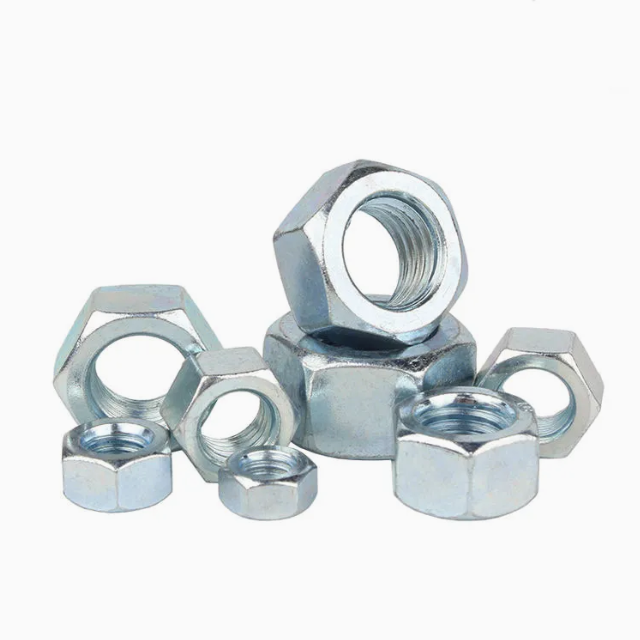
The Substitution Risk: ISO 4032 vs. Legacy DIN 934
Procurement teams often fall for the interchangeability myth. Many buyers assume ISO 4032 acts as a 1:1 drop-in replacement for DIN 934. This assumption is dangerous. The two standards share identical thread pitches. A DIN 933 bolt will physically accept an ISO nut. However, the external geometries differ significantly. Substituting them blindly causes immediate assembly problems.
We call this the "small wrench" factor. ISO updated the width-across-flats (WAF) dimensions. The new standard alters specific sizes to harmonize global tooling. M10, M12, and M14 sizes see the most disruption. You can see these critical deviations in the comparison table below.
Thread Size | DIN 934 Wrench Size (WAF) | ISO 4032 Wrench Size (WAF) | Dimensional Shift |
M10 | 17 mm | 16 mm | -1 mm (Smaller) |
M12 | 19 mm | 18 mm | -1 mm (Smaller) |
M14 | 22 mm | 21 mm | -1 mm (Smaller) |
These micro-deviations carry a massive engineering impact. Imagine an automated assembly line. A robotic arm uses a 17mm socket for legacy M10 nuts. You introduce the ISO standard parts. The 17mm socket slips over the 16mm nut. The robot strips the corners instantly. Production stops.
Spatial constraints in CAD modeling also suffer. Engineers design tight pockets for socket clearances. A 1mm difference might prevent a tool from reaching the fastener. Legacy maintenance protocols face similar hurdles. Field technicians carrying DIN-standard wrenches will strip the new ISO fasteners. You must audit your tooling before making this transition.
Specifying Load Capacity: Why ISO 4032 Requires a "Class" Designation
You must separate shape from strength. Requesting an "ISO 4032 nut" on an RFQ is completely incomplete. The standard merely defines the envelope. It does not dictate the payload capacity. An aluminum nut and a hardened steel nut can both meet this standard. Their performance in a clamped joint differs drastically.
Mechanical strength relies on the ISO 898-2 standard. This document defines Property Classes. You must match the nut strength to the bolt strength. Clamped joints rely on equal load distribution. If you use a Class 10.9 bolt, you must pair it with a Class 10 hex nut. The system works as a unified unit.
Substituting a lower-class nut causes joint failure. Imagine threading a Class 8 nut onto a high-tensile 10.9 bolt. The installer applies the required high torque. The bolt stretches correctly. However, the weaker nut cannot handle the clamping force. The internal threads shear off. Premature thread stripping compromises the entire structure.
Material variables also dictate application success. You must define the base metal clearly. Consider these common options:
Carbon Steel: Used for general indoor machinery. Highly cost-effective but prone to rust.
High-Strength Low-Alloy (HSLA) Steel: Ideal for heavy infrastructure. Offers exceptional yield strength without excessive weight.
A2 Stainless Steel (304): Perfect for wet environments. Resists moderate corrosion.
A4 Stainless Steel (316): Required for marine or chemical exposure. High molybdenum content prevents pitting.
Coatings, Compliance, and Environmental Durability
Surface treatments drastically alter installation physics. Every coating changes the friction coefficient. Engineers call this the K-Factor. The K-Factor dictates the torque-tension relationship. Standard zinc plating offers moderate friction. Zinc flake coatings lower friction significantly. PTFE treatments create a highly lubricated surface. If you apply identical torque to a PTFE-coated nut and a plain nut, the PTFE nut generates massive clamping force. It might snap the bolt. You must adjust torque calculations based on the specified coating.
The Hot Dip Galvanizing (HDG) process creates a unique challenge. HDG adds significant thickness to the fastener. Standard 6H threads cannot accommodate this extra layer. Threading a standard nut onto a galvanized bolt causes immediate binding. You must specify oversized tapping for HDG metric hex nuts. Suppliers typically machine these to 6AZ or 6AX tolerances. These oversized threads leave room for the thick zinc layer. Ignoring this requirement guarantees thread interference during field installation.
Regulatory compliance shapes modern procurement. Suppliers face strict environmental directives. The European Union enforces RoHS and REACH heavily. The industry is rapidly transitioning away from hexavalent chromium. This toxic chemical once dominated yellow zinc plating. You must evaluate suppliers based on their trivalent chromium or zinc flake alternatives.
Environmental testing validates durability. Buyers often request standard Salt Spray testing (ASTM B117). This test sprays continuous saltwater on the fastener. It works for basic comparisons. However, it fails to simulate real-world conditions. Heavy-duty infrastructure projects require more rigorous data. Offshore wind turbines demand cyclic corrosion testing (ISO 12944-9). This standard introduces UV light, freezing temperatures, and drying cycles. It predicts actual lifespan far more accurately than basic salt spray.
Procurement Checklist: Validating a Metric Hex Nut Supplier
Sourcing teams must stick to "Preferred" ISO sizes. The standard designates M8, M10, M12, and M16 as preferred dimensions. Manufacturers produce these in massive volumes. They guarantee high availability. The standard also lists "Non-preferred" dimensions like M14, M18, and M22. You should avoid these entirely. Non-preferred sizes create supply chain bottlenecks. Suppliers charge premium pricing for small production runs. If your CAD model uses an M14, redesign it for an M12 or M16.
Stainless steel procurement requires distinct galling mitigation strategies. Galling occurs during dry assembly. Friction melts the microscopic high points on the thread. The metals cold-weld together. The nut locks permanently onto the bolt halfway down the shaft. You cannot tighten it or remove it. You must verify your supplier offers preventative solutions. Ask for dry-film lubricants. Request wax coatings. Alternatively, seek strict guidance on applying anti-seize compounds during assembly.
Validating a supplier means scrutinizing their Quality Assurance documentation. A vague request yields bad parts. We strongly advise using a standardized RFQ matrix. Every inquiry for an ISO 4032 hex nut must include comprehensive data points. Review the checklist below to structure your enterprise procurement correctly.
Requirement Category | Required Specifics in RFQ | Why It Matters |
Standard Base | ISO 4032 (Style 1) | Defines the exact external geometry and height (1D). |
Thread Size & Pitch | e.g., M12 x 1.75 (Coarse) | Ensures proper mating with the corresponding bolt. |
Property Class | ISO 898-2 Class 8, 10, or 12 | Matches the load-bearing capacity of the tightened joint. |
Surface Finish | Zinc Flake, HDG (Oversized), or Plain | Dictates corrosion resistance and torque K-Factor adjustments. |
Test Reports | Material Cert 3.1, RoHS Declaration | Validates chemical composition and environmental compliance. |
Conclusion
Successful global integration relies on strict dimensional awareness. You must recognize the specific tool clearance changes brought by the ISO standard. Appropriate property class matching remains non-negotiable. Connecting a weak nut to a strong bolt invites disaster. Furthermore, coating-aware torque calculations protect the structural integrity of your assemblies. Every surface treatment requires a unique torque value.
Buyers must take immediate action to prevent manufacturing halts. Conduct a localized CAD audit of all existing DIN 934 assemblies. Check for tight socket clearances around M10 and M12 fasteners. If space is restricted, update your tooling protocols before the new stock arrives. Finally, update all legacy Bill of Materials (BOMs). Remove generic terms. Include explicit material classes, thread tolerances, and coating designations on every single line item.
FAQ
Q: Can I use an ISO 4032 hex nut on a DIN 933 bolt?
A: Yes. The internal threads are identical. Both standards share the same metric pitch profile. However, socket tool sizes may differ on the nut side for certain diameters. M10, M12, and M14 require smaller wrenches under the new standard. Always verify tool clearances.
Q: What is the fine-thread equivalent of the ISO 4032 standard?
A: ISO 8673 is used for fine-pitch metric hex nuts. It maintains the identical Style 1 outer geometry. It simply modifies the internal thread pitch. If you need ultra-fine pitches, you must specify ISO 8674 instead.
Q: Why is my stainless steel ISO 4032 nut seizing halfway down the bolt?
A: This indicates "galling" or cold welding. It happens frequently in A2 and A4 stainless steel under friction. The microscopic surface irregularities lock together. We recommend applying anti-seize lubricants before installation. You should also use slower installation RPMs to reduce heat generation.
Q: How does a Class 10 hex nut differ from a Class 8?
A: It indicates proof load stress limits. A Class 10 fastener undergoes specific heat treatment. It withstands the massive clamping forces of a 10.9-grade bolt without thread deformation. Class 8 fasteners are weaker. They suit 8.8-grade bolts exclusively.


