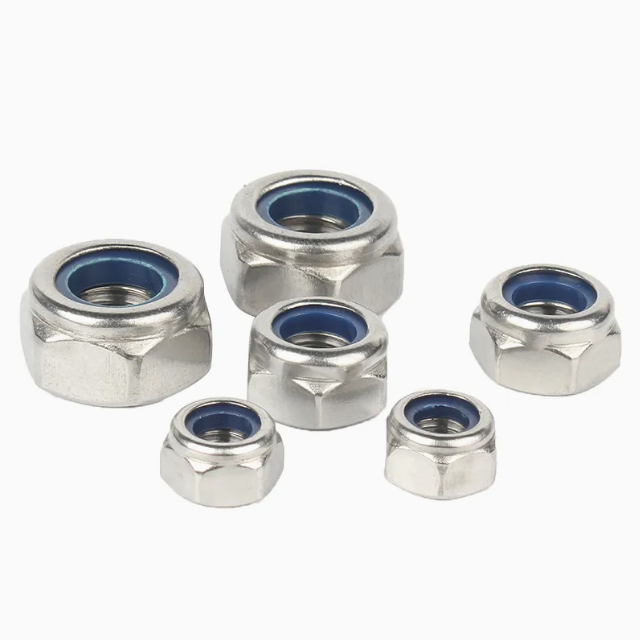
Engineers constantly battle the physical forces trying to tear structures apart. Preventing fastener failure under dynamic loads stands as a relentless engineering challenge. Unchecked movement quickly shears bolts or loosens vital assemblies. You need reliable ways to keep joints intact without driving up assembly time or overly complicating the manufacturing process. The nylon lock nut serves as the industry's most common prevailing torque fastener. Manufacturers designed it specifically to resist loosening under constant resonance. It effectively replaces secondary locking mechanisms like cotter pins, safety wire, or messy chemical adhesives.
We will explore where these nuts succeed and define their strict operational limits. You will learn how to evaluate their performance against mechanical alternatives and understand the physics of their gripping mechanism. Finally, we will show you how to determine if they meet the correct specifications for your next critical assembly. This guide clarifies the selection process for structural and mechanical professionals alike.
Key Takeaways
Primary Function: Secures joints against moderate vibration through an interference fit created by thread deformation into a captive polymer ring.
Hard Limits: Not suitable for high-temperature applications (typically exceeding 250°F/121°C) or critical high-shock environments.
Reusability: While technically reusable, holding power degrades significantly after the first installation; single-use is recommended for structural applications.
Standardization: Widely available under global specifications, most notably as the DIN 985 lock nut, ensuring predictable procurement and performance.
Why Engineers Specify the Nylon Insert Lock Nut: Mechanics and Standards
Standard nuts vibrate loose under dynamic loads. This physical reality leads to catastrophic joint failure. Maintenance overhead increases rapidly as technicians constantly re-tighten hardware. Safety hazards emerge quickly in critical structural systems. Regular hex nuts rely purely on tension to stay clamped. When a machine vibrates, this clamp load momentarily drops. The nut then spins backwards. You lose the structural integrity of the joint entirely.
We must understand the "prevailing torque" concept to solve this. The nylon insert lock nut tackles the loosening problem internally. It contains an unthreaded polymer ring securely captured at the top of the metal body. When you drive a bolt through the nut, the metal threads hit this ring. The ring forces the mating threads into a tight bind. Friction takes over immediately. The internal plastic molds itself precisely around the bolt profile. It grabs the metal tightly. This constant, 360-degree friction prevents the nut from backing off even when clamp load drops.
The engagement process follows predictable mechanical steps:
The bolt passes through the standard metal threads easily without resistance.
The bolt tip encounters the captive unthreaded polymer ring at the top.
The installer applies extra rotational force to press into the nylon.
The polymer deforms plastically, creating a perfect friction fit around the mating threads.
Procurement departments rely heavily on predictable international standards. You will often see the DIN 985 lock nut standard specified on engineering drawings. This establishes the low-profile version. Alternatively, the DIN 982 standard defines the high-profile version. These standards establish a strict, repeatable baseline. They dictate material quality, outer dimensions, and expected thread engagement depths. Buyers know exactly what performance metrics they will receive.
This fastener offers immense overall value. The polymer insert acts as a highly cost-effective mechanical solution. It scales easily for rapid mass production lines. You avoid buying complex, multi-part lock washers. You skip the messy application and curing time of chemical threadlockers. Assembly line workers install them quickly using standard, everyday pneumatic or hand tools.
Core Applications: Where Nylon Prevails
You must evaluate fastener choices based on strict cost-to-outcome ratios. This fastener performs perfectly for very specific scenarios. It excels when you need consistent, dependable vibration resistance across hundreds of joints. However, the operational environment must avoid extreme temperature fluctuations or harsh chemical baths. When deployed in the correct environment, these fasteners virtually eliminate spontaneous loosening.
Automotive assembly lines consume millions of these components daily. They secure secondary chassis components safely and predictably. You will find them throughout interior cabin assemblies, dashboard mounts, and seating tracks. They lock down lightweight suspension parts efficiently. In these specific vehicle zones, ambient temperatures remain quite moderate. The risk of thermal degradation remains extremely low, making them the perfect choice for passenger safety and long-term vehicle durability.
Light industrial machinery manufacturing floors rely heavily on these fasteners to maintain continuous production.
Conveyor Systems: They handle continuous rattling from rollers and drive belts without backing out.
HVAC Mounts: They secure vibrating industrial fans, blower motors, and ducting frames quietly.
Framing Assemblies: They combat steady, low-amplitude resonance in aluminum extrusion frameworks.
In these applications, they absorb minor dynamic shifts seamlessly. They hold heavy machinery frames securely together without requiring constant torque audits from the maintenance team.
High-volume consumer goods manufacturing demands incredibly fast assembly. Lawnmowers and power equipment vibrate intensely during standard operation. Manufacturers use these nuts to keep handles, blade guards, and engine shrouds securely attached. Commercial furniture assemblies use them to ensure long-term stability under varying weight loads. Appliance builders rely on them heavily for high-RPM washing machines and dryers. They allow rapid, tool-friendly assembly at a massive global scale.
Operational Limits and Safety Constraints
You cannot use these fasteners blindly across every project. Over-specifying or misapplying them carries serious engineering realities. Transportation safety boards frequently issue severe alerts regarding improper fastener usage. Failing to respect mechanical limits inevitably leads to structural collapses. You must fully understand exactly where the polymer insert fails and why it happens.
Polyamide materials react predictably to heat. You must respect the physical degradation point of the internal ring. Standard nylon inserts begin to soften dramatically at high temperatures. Safe operation typically caps around 250°F or 121°C. If your engine assembly or exhaust manifold exceeds this ceiling, the polymer melts away. It loses its grip entirely. The joint will loosen immediately under vibration, leaving the metal threads completely unprotected.
Factory environments often introduce highly aggressive fluids. Solvents, potent acids, and harsh industrial cleaning chemicals attack unprotected polymers. These substances degrade the internal ring slowly over time. The plastic becomes severely brittle or dissolves entirely. You suffer a sudden, unexpected loss of prevailing torque. Always verify chemical compatibility data sheets before finalizing your project specifications.
Engineers carefully differentiate between types of dynamic forces. Steady vibration involves rapid, small, consistent movements. Nylon works perfectly here. It absorbs the minor resonance effortlessly. Transverse shock, however, involves sudden, massive, jarring impacts. Heavy dynamic loads push the joint sideways violently. Under extreme transverse shock, the friction fit may fail. The nut could slip or strip the plastic out completely. You must evaluate the difference between resonance and impact carefully.
Nylon Lock Nut vs. All-Metal Lock Nut: A Decision Framework
Decision-stage buyers often face a clear fork in the road during hardware selection. You must choose between polymer inserts and all-metal designs. We designed a straightforward comparative analysis to clarify this daily engineering choice.
Comparison Matrix: Nylon Insert vs. All-Metal Lock Nuts
Evaluation Feature
Nylon Insert Fastener
All-Metal Fastener (Stover/Toplock)
Temperature Limit
Maximum ~250°F (121°C)
Exceeds 1000°F (Depends on base metal)
Reusability
Poor (Single structural use recommended)
Moderate (Can often survive multiple cycles)
Thread Galling Risk
Very Low (Plastic acts as a buffer)
High (Especially with stainless steel bolts)
Moisture Sealing
Good (Polymer blocks thread paths)
None (Metal-to-metal gaps remain)
You should specify the polymer insert for several distinct reasons. First, it offers a lower overall procurement cost for high-volume production runs. Second, it carries virtually zero risk of thread galling. This proves absolutely vital when you build with stainless steel bolts. Stainless rubbing on stainless often seizes up permanently. The plastic ring prevents this destructive, cold-welding friction. Third, it offers distinct sealing properties. The internal ring slightly restricts moisture penetration. It successfully blocks water from traveling down the microscopic thread paths.
Sometimes you must upgrade your hardware to meet harsher realities. All-metal lock nuts mechanically deform their actual metal threads to create intense friction. Select them exclusively for high-temperature environments. Heavy-duty engines, exhaust manifolds, and industrial ovens destroy plastic inserts rapidly. Choose them for applications requiring repetitive maintenance. They survive multiple re-torquing cycles much better than plastic. Specify them for severe vibration environments where critical structural joints require aggressive, permanent mechanical locking forces.
Implementation Best Practices and Assembly Risks
Successful assembly begins with the mating bolt itself. You must use bolts featuring a properly chamfered end. The bolt tip must be reasonably smooth and slightly angled. This simple detail allows the bolt to engage the polymer smoothly. It threads into the nylon without aggressively cutting or shredding it. Sharp, unchamfered bolts act like cutting taps. They tear the plastic out entirely. Tearing destroys the friction fit completely, rendering the fastener useless.
Prevailing torque alters standard installation mathematics. As the bolt enters the plastic, rotational resistance increases instantly. This constant resistance deeply affects total installation torque requirements. You cannot simply read a standard, unmodified torque chart. You must adjust your torque wrenches to account for the heavy friction drag. If you ignore this drag, you will drastically under-tighten the actual metal joint. The clamping load will fall dangerously low, risking joint separation.
Standard Torque Adjustment Phases
Installation Phase
Torque Action
Mechanical Result
Initial Run-down
Overcoming internal plastic friction
Bolt threads successfully engage and mold the polymer ring.
Seating
Clamping surfaces finally meet
Pre-load generation begins across the structural joint.
Final Tightening
Adjusted target torque reached
Joint is fully secured against vibration.
Mechanics frequently ask if they can safely reuse these fasteners. We must address the mechanical reality of permanent polymer deformation. Once you drive a bolt completely through the insert, the plastic stretches outward. It molds permanently to that exact, specific thread profile. When you remove the nut later, the nylon does not spring back fully to its original diameter. Holding power degrades significantly after the very first installation. Safety protocols strongly recommend replacing the nut after a single use. This rigorous practice guarantees the specified locking performance. Do not gamble on reused structural fasteners to save minor hardware costs.
Furthermore, avoid using high-speed impact wrenches during installation. The extreme rotational speed generates excessive friction heat. This rapid heat easily melts the polyamide ring before the joint fully seats. Mechanics should use controlled hand tools or calibrated pneumatic drivers running at moderate RPMs to ensure the plastic retains its structural integrity during assembly.
Conclusion
We return to a clear, established engineering consensus. The polymer-inserted fastener remains a highly effective, dependable choice. It delivers economical security for low-to-medium vibration environments effortlessly. It consistently dominates ambient-temperature manufacturing applications worldwide. It simplifies assembly lines and reduces long-term maintenance drastically.
You need a reliable quick-check rule for your procurement and engineering teams. If the joint environment routinely exceeds 250°F, you must look elsewhere immediately. If the specific assembly requires frequent, scheduled disassembly, upgrade to an all-metal design. Otherwise, standard low-profile polymer inserts handle the job perfectly.
Take action on your next design phase today. Consult your specific bolt load charts carefully to adjust for friction drag. Request physical hardware samples from your distributor for real-world environmental testing. Compare exact technical specifications closely to ensure safe, compliant project procurement.
FAQ
Q: Can you reuse a nylon insert lock nut?
A: Safety standards strongly advise against it. Once installed, the internal polymer ring permanently deforms around the specific bolt threads. If you remove it, the plastic does not fully recover its original tight shape. Reusing the fastener significantly reduces its holding power and vibration resistance. For critical structural joints, always install a brand new nut to guarantee safety.
Q: Do I need a washer with a nylon lock nut?
A: Washers serve a completely different mechanical purpose. They distribute the clamping load evenly across a wider surface area. They prevent the rotating nut from gouging or damaging the parent material. The lock nut provides the actual internal resistance to loosening. If your joint requires load distribution or surface protection, you should absolutely include a proper washer.
Q: Can I use threadlocker (Loctite) with a nylon lock nut?
A: You should avoid combining them. Liquid threadlockers often contain anaerobic chemicals or aggressive cyanoacrylates. These chemical compounds are frequently incompatible with industrial plastics. They can severely degrade, soften, or crack the polyamide ring over time. The mechanical grip alone provides sufficient resistance for moderate dynamic loads without requiring additional chemical assistance.
Q: What is the difference between DIN 985 and DIN 982?
A: The primary difference lies directly in their physical profile and height. The DIN 985 standard specifies a low-profile design. It offers a shorter overall height and standard, everyday thread engagement. The DIN 982 standard specifies a high-profile design. It provides a taller nut body and deeper thread engagement, making it suitable for slightly more demanding structural applications.