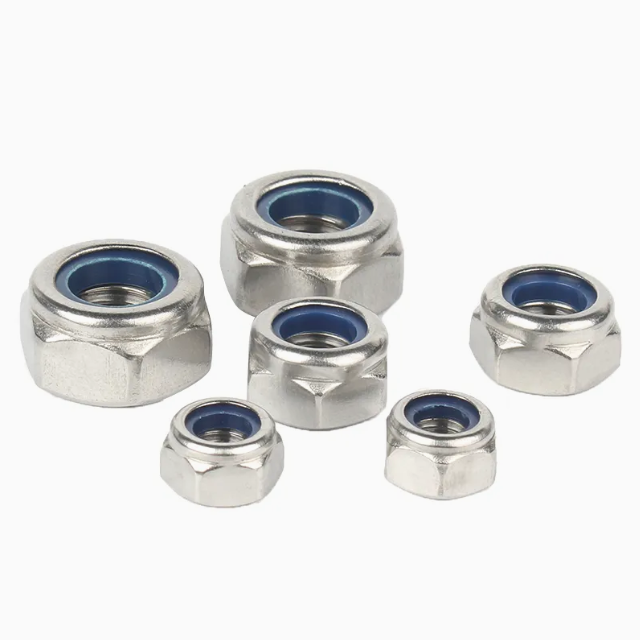
Fastener failure from continuous vibration poses a severe risk in heavy assembly and modern manufacturing. An unscheduled stop or structural collapse often traces back to a single loose bolt. Unplanned downtime carries steep financial penalties, while compromised joints create serious safety hazards on the production floor. Engineers constantly battle dynamic loads. You need reliable methods to secure assemblies without adding excessive maintenance overhead to your projects.
You might wonder exactly what is nylock and why it remains a top choice for prevailing torque fasteners. We will explore how these components function on a mechanical level. You will identify their operational limits in harsh environments. Finally, we will compare them against other securing strategies to help you make informed engineering decisions.
Key Takeaways
Core Function: Nylon insert lock nuts utilize a captured polymer ring to create friction and grip mating threads, preventing vibration-induced back-off.
Critical Limits: They are strictly limited by temperature thresholds (typically ~250°F/121°C) and should not be reused in critical structural applications.
Standardization: Commonly specified under industrial standards such as DIN 985.
Best Use Case: Highly cost-effective for mid-tier vibration environments where extreme heat or harsh chemical exposure is not a primary factor.
How the Nylon Insert Lock Nut Works
Definition and Mechanism
Understanding the structure of a Nylock nut begins with its basic geometry. It looks like a standard hex nut but features an integrated, undersized polymer collar housed at the top. Manufacturers typically crimp or roll the metal housing over this collar to lock it permanently in place. This unthreaded collar has a smaller inner diameter than the actual metal threads below it. When you thread a bolt through the metal section, it spins freely until it reaches this restrictive upper ring. This simple but ingenious design forms the foundation of its vibration-resistant properties.
The Physics of Locking: Prevailing Torque
The true magic happens when the bolt encounters the polymer insert. Because the collar lacks pre-cut threads, the advancing bolt must physically cut its own path into the nylon material. This action generates significant friction. Engineers refer to this as prevailing torque. The nylon ring elastically deforms around the metal threads. It creates continuous radial pressure against the bolt. This constant squeezing force prevents the nut from backing off under dynamic loads.
The installation process generally follows these three distinct phases:
Free-spinning phase: The bolt easily threads through the lower metal portion of the nut.
Engagement phase: The lead thread of the bolt strikes the unthreaded polymer collar. Resistance immediately spikes.
Locking phase: The bolt pushes entirely through the collar. The nylon compresses and grips the threads, establishing the final prevailing torque.
Secondary Benefits
Beyond vibration resistance, the tight seal provides hidden advantages. The compressed nylon forms a physical barrier around the exposed threads. It heavily restricts moisture ingress. This mild weatherproofing reduces the likelihood of galvanic corrosion inside the thread assembly. You gain an assembly protected against moderate environmental factors. It helps ensure easier removal during future maintenance cycles.
Evaluation Criteria: Advantages and Operational Limitations
Outcome-Focused Advantages
Engineers consistently specify the nylon insert lock nut for its exceptional cost-to-performance ratio. You can procure these fasteners cheaply at scale. They offer a much more economical solution compared to complex wedge-locking washers. They also outperform specialized chemical threadlockers in high-volume production. Because you rely on mechanical friction rather than chemical adhesion, no curing time is required. Workers can assemble joints rapidly. The line keeps moving, and throughput increases significantly. You gain immediate load-bearing capacity the moment you achieve the target torque.
Evidence-Oriented Risks and Limitations
Despite their popularity, these fasteners carry specific operational constraints. You must evaluate the working environment carefully before specification.
Thermal Constraints: Standard nylon melts or degrades under high heat. The safe operating temperature typically drops off sharply at 250°F (121°C). Exceeding this limit causes the polymer to flow. It permanently loses its elastic memory and holding power.
Chemical Vulnerability: You must evaluate susceptibility to aggressive industrial solvents. Strong acids and certain alkaline solutions will degrade the polymer insert over time. You should avoid standard nylon in heavy chemical processing plants.
Torque Friction Variables: The unthreaded insert drastically alters the torque-tension relationship. When workers install the nut, the wrench must overcome the prevailing torque before it actually stretches the bolt. If you ignore this variable, you risk under-tightening the assembly.
Common Mistake: Many technicians use standard torque charts designed for free-spinning nuts. You must always add the prevailing torque value to your target clamping torque to achieve the correct joint tension.
Sourcing and Compliance: DIN 985 and Thread Compatibility
Standardization: DIN 985 and ISO Standards
When you source fasteners for industrial applications, adherence to established standards guarantees predictable performance. Engineers commonly specify DIN 985 for standard profile locking applications. This standard dictates precise requirements for nut height, thread pitch, and load-bearing profiles. It ensures that every batch meets rigorous quality controls.
The standard categorizes the overall height and wrenching dimensions. It specifies a "low profile" design. This makes it ideal for tight clearances where you cannot fit a heavy hex nut. By strictly following dimensional tolerances, manufacturers ensure the polymer ring engages the bolt at the correct depth. It prevents premature thread stripping and ensures consistent prevailing torque across thousands of identical units.
Material Compatibility
You must outline typical material pairings to guarantee joint integrity. A mismatch between bolt and nut grades can cause catastrophic shear failure. Common pairings include zinc-plated steel for general environments and stainless steel for marine applications. You should always ensure the hardness of the nut matches or slightly exceeds the bolt grade. Using a low-grade nut on a high-tensile bolt will strip the internal threads long before the bolt reaches its yield point.
Galling Risks
You face a specific risk when combining stainless steel hardware. Stainless steel naturally generates an oxide layer. Under the intense friction of tightening, this protective layer breaks down. The raw metals weld together temporarily. This phenomenon is known as thread galling. The prevailing torque of the polymer insert exacerbates this friction. To mitigate galling, you must apply a high-quality anti-seize compound. Using PTFE-based or nickel-based anti-seize drastically reduces friction during installation.
Standard Fastener Dimensional and Profile Specifications
Standard Reference
Profile Type
Typical Application
Clearance Requirement
DIN 985
Low Profile / Thin
General machinery, limited space
Minimal vertical clearance
DIN 982
High Profile / Thick
Heavy structural, high load
Requires extended bolt threads
ISO 7040
Standard Hex
Automotive, standard assembly
Standard vertical clearance
Nylock Nut vs. Alternative Anti-Loosening Solutions
Nylon Insert vs. All-Metal Lock Nuts (Stover/Top Lock)
Engineers often debate between polymer inserts and all-metal deformed thread nuts. All-metal lock nuts feature a distorted top thread. They create friction purely through metal-to-metal interference. When we compare temperature resilience, the all-metal design clearly wins. You can deploy them in engine blocks, exhaust manifolds, and foundries where temperatures exceed 500°F (260°C). However, they come with a significant drawback. The distorted metal aggressively digs into the mating bolt. This action often damages the bolt threads permanently. The polymer insert is far less destructive. It preserves the integrity of expensive bolts during disassembly.
Nylon Insert vs. Wedge-Locking Washers
Wedge-locking washers, such as the Nord-Lock system, operate on tension rather than friction. They use interlocking cams. When the bolt tries to loosen, the cams force the bolt to stretch further. We must acknowledge the superior performance of wedge-locking washers in extreme Junker vibration tests. They simply do not back off under severe transverse vibration.
However, you must frame the decision around pragmatism. Wedge washers cost significantly more. They also require specific surface hardness conditions to bite properly. You should use the polymer insert for general-purpose assembly and cost control. Specify wedge-locking washers only for mission-critical, severe-vibration joints where failure means catastrophic loss.
Nylon Insert vs. Chemical Threadlockers
Liquid threadlockers, like Loctite, fill the microscopic gaps between threads. They cure into a hard plastic in the absence of air. This creates excellent vibration resistance and seals the joint perfectly against fluids. Yet, you must consider the maintenance realities. Liquid adhesives require clean, oil-free threads to cure properly. They demand specific curing times before you can apply full loads.
By contrast, the mechanical locking nut offers much cleaner removal. You achieve predictable breakaway torque without requiring heat application. Mechanics despise cleaning cured adhesive out of blind holes. The mechanical nut provides an instant, mess-free solution that speeds up both assembly and field repairs.
Implementation Realities: The Reusability Debate and Installation
The Reusability Myth
A dangerous myth persists across many maintenance departments. You will often see forum posts claiming you can safely reuse these fasteners multiple times. We must address this industry confusion immediately. Technically, you might feel resistance when threading a used nut onto a bolt. However, standard engineering compliance dictates they are single-use components in load-bearing or safety-critical applications.
When you install the nut the first time, the bolt threads cut a permanent path into the collar. The polymer undergoes permanent plastic deformation. It loses its vital elastic memory. If you remove and reinstall it, the radial pressure drops drastically. The prevailing torque falls below safe operational limits. Reusing them in structural assemblies directly violates aviation, automotive, and heavy machinery safety codes. You must discard them after a single use to guarantee joint integrity.
Installation Best Practices
Proper installation dictates the long-term success of the joint. You must follow strict guidelines to ensure the locking mechanism engages correctly.
Thread Protrusion Minimums: The bolt must fully pass through the polymer ring. Engineering standards demand a minimum of 1.5 to 2 full threads visible past the top of the nut. If the bolt stops flush inside the ring, the locking mechanism remains incomplete.
Torque Adjustments: You must calculate the prevailing torque. Run the nut down until the nylon engages, but before it clamps the joint. Measure the torque required to keep it turning. Add this baseline value to your final required clamping torque.
Tool Selection: Use manual torque wrenches or calibrated electric tools. High-speed pneumatic impact wrenches generate extreme friction heat. This rapid heat buildup can actually melt the polymer insert before the joint is fully clamped.
Best Practice: Always hand-thread the fastener for the first two turns. This simple step prevents cross-threading, which will destroy both the metal threads and the polymer collar instantly.
Conclusion
The nylon insert lock nut stands out as a highly effective, economical choice for standard vibration resistance. It balances ease of installation with reliable, long-lasting performance. You can secure vast assemblies rapidly without the mess of liquid adhesives or the high cost of specialized wedge washers. However, you must respect its physical limitations. Thermal degradation and the strict rule against reusability dictate where you can safely deploy these components.
To ensure optimal results in your next project, take these actionable steps:
Review your current bill of materials to identify any high-temperature zones exceeding 250°F.
Replace any reused locking nuts in safety-critical structural joints immediately.
Verify application temperatures and consult specification charts before finalizing bulk procurement.
Train your assembly teams to measure and compensate for prevailing torque during installation.
FAQ
Q: Can you reuse a nylon insert lock nut?
A: It is technically possible to feel resistance during a second use in non-critical DIY settings. However, you are strictly advised against doing this in industrial and structural applications. The polymer ring loses its elastic memory and holding power after the first installation due to permanent plastic deformation. You should always replace them.
Q: What temperature can a Nylock nut withstand?
A: Most standard polymer inserts degrade when temperatures rise above 250°F (121°C). At this point, the insert softens and loses its grip on the bolt threads. For high-temperature environments like engines or exhausts, you must switch to all-metal deformed thread lock nuts.
Q: Is there a difference between Nyloc, Nylok, and nylon insert lock nuts?
A: Structurally, they are the exact same fastener. "Nyloc" and "Nylok" are historically trademarked brand names established decades ago. Over time, these specific brand names became proprietary eponyms. Just as people call tissues "Kleenex," the industry casually uses these terms to describe any generic nylon insert lock nut.
Q: Which side of a Nylock nut goes on first?
A: The flat metal face always goes onto the bolt first. You thread it so the side with the visible polymer ring faces outward, away from the mating joint surface. This orientation ensures the metal threads take the initial load before the bolt engages the locking collar.