Fastener selection dictates the lifespan of mechanical assemblies. High-vibration and dynamic load environments demand exceptionally reliable locking mechanisms. If you choose the wrong fastener, you risk catastrophic assembly failure. These sudden failures increase maintenance costs and severely compromise user safety. Engineers must carefully evaluate every joint before final assembly. You cannot simply guess which locking mechanism works best.
Our goal is to provide a clear, evidence-based framework for your design process. We will help you decide when to use a nylon lock nut versus an all-metal alternative. We evaluate crucial factors like operating temperature, vibration intensity, and component reusability. We also examine essential engineering standards ensuring compliance. By the end, you will know exactly how to secure your application safely and permanently.
Key Takeaways
Nylon lock nuts provide reliable, cost-effective vibration resistance and thread protection for standard operating temperatures (typically under 250°F).
All-metal lock nuts are mandatory for extreme conditions requiring high-temperature fasteners or exposure to harsh chemicals.
While nylon inserts allow for limited reusability, deformed-thread metal lock nuts carry a high risk of thread galling and are generally single-use.
Matching the nut to specific engineering standards (e.g., DIN 985 for nylon vs. DIN 980V for metal) ensures compliance and predictable performance.
The Core Mechanisms: How They Prevent Loosening
Engineers design both lock nut styles to solve a specific problem. Standard nuts loosen under dynamic shock. When parts vibrate, standard threads lose their friction grip. Lock nuts introduce prevailing torque. This prevailing torque maintains friction even if the joint loses its initial clamping force.
The Nylon Insert Approach
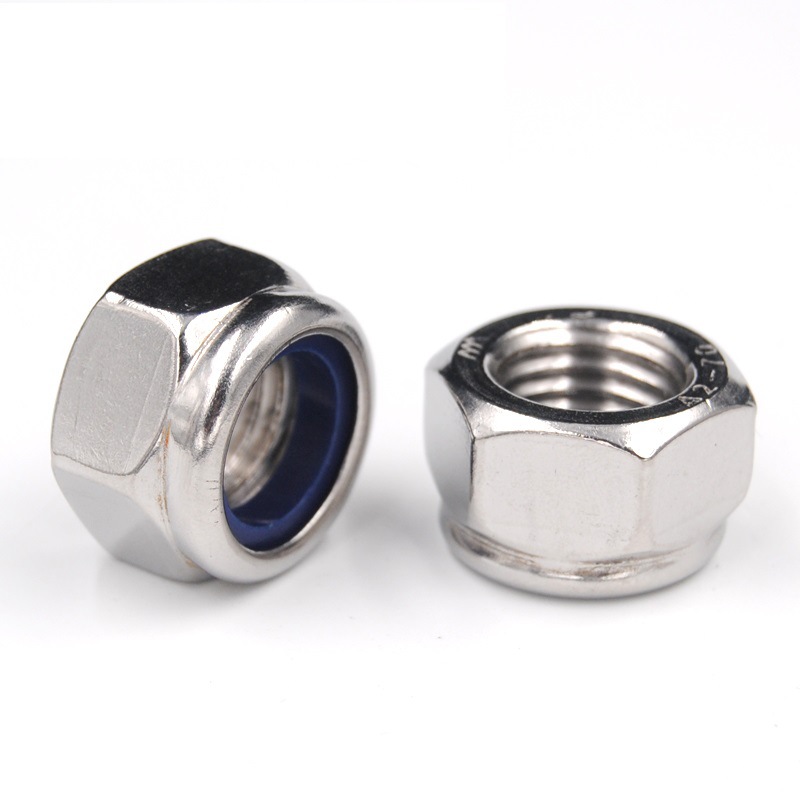
Manufacturers press a captive nylon ring into the top of the nut. This collar has a smaller inner diameter than the mating bolt. When you thread the bolt through the nut, it reaches this insert. The metal threads do not cut the nylon material. Instead, they force the plastic to deform elastically. This elastic memory makes the nylon squeeze tightly around the bolt.
This squeezing action creates tremendous radial pressure. The pressure establishes high friction along the mating threads. It grips the bolt firmly. This mechanism resists severe vibration without damaging the metal bolt. The elastic nature of the plastic absorbs micro-vibrations excellently. It effectively prevents the fastener assembly from backing off.
The All-Metal Approach
All-metal designs rely on mechanical deformation instead of plastic inserts. Manufacturers typically use a top-lock mechanism. They physically distort the top threads of the nut during production. They compress these threads into a slightly elliptical or flattened shape. This shape creates a deliberate interference fit.
When the bolt reaches these deformed threads, it meets intense resistance. The metal threads must flex outward slightly to accommodate the bolt. This flexing creates massive metal-on-metal friction. This friction binds the fastener tightly in place. The rigid mechanism provides uncompromising holding power. It performs reliably even under brutal environmental stressors.
Nylon Lock Nut vs Metal Lock Nut: Key Evaluation Dimensions
Choosing between these two mechanisms requires careful environmental analysis. You must evaluate the exact conditions your assembly will face in the field. Below, we break down the most critical performance dimensions.
Lock Nut Performance Comparison Chart
Performance Metric
Nylon Insert Lock Nut
All-Metal Lock Nut
Maximum Temperature
~250°F (121°C)
1000°F+ (Material Dependent)
Vibration Resistance
Excellent (Absorbs micro-vibrations)
Excellent (Rigid hold)
Reusability
Low to Moderate (2-3 times)
Strictly Single-Use
Galling Risk
Very Low
High (Especially Stainless Steel)
Thermal Limits and Environmental Resistance
Temperature dictates material choices more than any other variable. Nylon inserts fail predictably under extreme temperatures. Most commercial nylon collars melt or degrade at 250°F (121°C). Once the plastic melts, the nut loses all prevailing torque. It becomes a standard nut, vulnerable to instant loosening. Extreme cold also harms plastic. In sub-zero environments, nylon becomes brittle. It can shatter upon installation.
Chemical exposure presents another threat. Certain acids and harsh industrial solvents degrade nylon quickly. Conversely, all-metal designs thrive in severe conditions. Engineers specify them exclusively as high-temperature fasteners for demanding applications. You will find them in exhaust manifolds, jet engine bays, and heavy industrial furnaces. Their thermal limit depends entirely on the base alloy.
Vibration and Shock Load Tolerance
Both designs handle vibration well, but they react differently. Nylon provides a dampening effect. In high-frequency vibration environments, the plastic collar absorbs kinetic energy. Consider a motorsport or karting chassis. These frames experience constant, high-frequency buzzing. Nylon excels here because it resists vibrating loose while cushioning the joint.
However, plastic suffers from "creep." Under constant heavy pressure over time, plastic slowly deforms permanently. Metal resists creep entirely. In massive static infrastructure, dynamic shock loads demand rigid holding power. All-metal nuts clamp down forcefully. They refuse to yield under massive sudden impacts. They provide superior security for heavy structural joints.
Reusability and Maintenance Cycles
Maintenance teams often misunderstand reusability rules. You can theoretically reuse nylon collars a few times. After the first installation, the nylon loses some elastic recovery. It will never grip as tightly on the second use. Most aviation mechanics refuse to reuse them entirely. For general consumer goods, reusing them once or twice remains acceptable.
All-metal deformed-thread nuts are strictly single-use components. When you force a bolt through the elliptical threads, it cuts and reshapes the metal. If you remove the nut, the threads remain permanently altered. Reinstalling it guarantees a massive loss of prevailing torque. You compromise the holding power completely. Always discard all-metal locking nuts after removal.
Thread Wear and Galling Risks
Nylon protects expensive bolts. Because the plastic deforms, it shields the underlying metal threads from abrasive wear. If you use custom-machined titanium bolts, nylon preserves their structural integrity perfectly.
All-metal designs introduce severe friction risks. The interference fit creates immense heat and pressure during installation. This pressure often causes thread galling. Galling occurs when friction strips away the protective oxide layer on metals. The raw metals then cold-weld together. This happens frequently in stainless steel assemblies. Once threads gall, the joint seizes completely. You must often cut the bolt to remove it. Mechanics must use anti-seize lubricants to prevent this disaster.
Application Scenarios: Mapping Features to Outcomes
Abstract specifications matter less than real-world results. We map these features directly to common industrial applications below. This alignment helps you verify your engineering choices.
When to Specify a Nylon Lock Nut
Delicate assemblies require micro-vibration control. Precision optical mounts and astronomy equipment rely heavily on nylon. The plastic dampens structural buzzing. This prevents sensitive lenses from shifting out of alignment. The smooth installation also prevents metallic dust generation inside cleanrooms.
Automotive interiors also benefit greatly from nylon. Dashboard mounts experience constant road vibration. The temperatures inside a cabin rarely exceed nylon's thermal limits. Marine applications use them extensively too. Builders use stainless steel nuts to resist saltwater corrosion. The nylon insert handles the vibration from boat engines flawlessly. This combination provides a perfect, maintenance-friendly solution.
When to Specify an All-Metal Lock Nut
High-heat zones absolutely require metal locking mechanisms. Automotive exhaust manifolds glow red under heavy load. A plastic insert would vaporize instantly here. Aerospace engine components face similar thermal extremes. Engineers cannot compromise safety in these environments. Only raw metal-on-metal friction survives.
Heavy-duty structural builds also demand metal. Bridge constructions and crane assemblies experience massive shear forces. These applications require strict engineering compliance. Specifying a DIN 980V component guarantees high-tensile strength. It guarantees extreme torque limits. You achieve a permanent, unyielding joint suited for critical infrastructure.
Implementation Realities: Common Failures and Avoidance
Even the best components fail if installed incorrectly. Assembly lines routinely encounter specific pitfalls. Understanding these errors prevents costly downtime and compromised safety.
Consider the following steps to avoid common installation failures:
Account for Torque Calculation Errors: Prevailing torque changes your final clamping force. A torque wrench measures resistance. If a lock nut requires 10 ft-lbs just to spin down the threads, you must add this to your target torque. If your spec requires 50 ft-lbs of clamping force, you must set your wrench to 60 ft-lbs. Ignoring this leaves your joint under-tightened.
Avoid the Cross-Threading Trap: Deformed threads resist entry immediately. If an operator misaligns an all-metal nut, the forced entry destroys the bolt threads. Mechanics must start the nut perfectly straight. Stripping a large, specialized structural bolt causes massive delays. It forces expensive rework.
Ensure Strict Material Compatibility: Fastener grades must match. If you use a Grade 8 bolt, you must use a Grade 8 lock nut. Placing a hard metal nut on a soft bolt shreds the bolt threads entirely. Placing a soft nut on a hard bolt flattens the nut's locking mechanism. Always match the tensile strength of your mating components.
Purchasing Framework and Next Steps
Procurement teams must balance unit pricing against long-term reliability. A nylon component costs significantly less upfront. It requires less specialized tooling for installation. However, in harsh environments, plastics fail prematurely. This failure forces expensive maintenance interventions. Assessing a nylon lock nut vs metal lock nut requires looking beyond the initial invoice. You must calculate the cost of potential joint failure.
Standardization drives procurement efficiency. Audit your current bill of materials today. Verify your engineering drawings specify the correct DIN or ANSI standards. Ambiguous descriptions lead to supplier substitutions. A supplier might provide a cheap, non-certified metal nut instead of a tested aerospace component. You must lock down your specification sheets.
We encourage engineers to request physical samples. Test them in your actual assembly environment. Apply your specific torque loads. Expose them to your actual operating temperatures. Consult technical sales teams for specialized chemical environments. Real-world testing remains the only way to validate an engineering assumption completely.
Conclusion
The final verdict relies strictly on your application's environment. Operating temperature, vibration intensity, and maintenance frequency dictate the correct choice. Nylon lock nuts dominate general manufacturing. They offer exceptional vibration resistance, thread protection, and ease of use below 250°F. All-metal lock nuts own the extreme application space. They handle massive heat, brutal shock loads, and harsh chemicals effortlessly.
Remember the risks of poor specification. Over-engineering a simple assembly by using metal causes unnecessary galling headaches. Under-engineering a high-heat zone by using plastic invites catastrophic failure. Evaluate your thermal limits carefully. Match your material grades precisely. Use industry standards to guarantee performance.
Take action on your fastener strategy today. Review your critical joints and update your technical specification sheets. Contact our engineering support team to discuss your specific load requirements and secure the right samples for your next prototype.
FAQ
Q: Can a nylon lock nut be reused safely?
A: General best practice allows reusing them one or two times in non-critical applications. However, the nylon insert loses its elastic memory after the first use. It will never grip as tightly again. Aviation and aerospace OEMs strictly prohibit reusing them to ensure maximum safety.
Q: What temperature will a nylon lock nut melt at?
A: Standard nylon 6/6 inserts typically fail around 250°F (121°C). At this temperature, the plastic softens and loses its prevailing torque. If your assembly exceeds 250°F, you must upgrade to an all-metal locking fastener to prevent joint failure.
Q: Do I need washers with all-metal lock nuts?
A: Yes, using hardened washers is highly recommended. Washers distribute the heavy clamping load evenly across the joint surface. They also prevent the aggressive locking nut from gouging or embedding into softer base materials during final torqueing.
Q: Why is my all-metal lock nut seizing on the bolt?
A: Your threads are likely experiencing galling. The intense friction of the deformed metal threads scrapes away protective surface layers, causing the metals to cold-weld together. This is very common with stainless steel. Always apply an anti-seize lubricant prior to installation to prevent seizing.