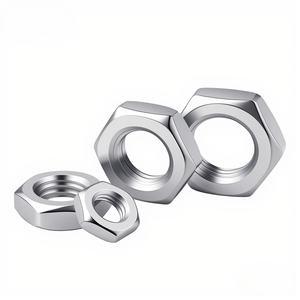
Fastener failure causes major headaches in dynamic mechanical environments. Heavy machinery constantly generates transverse vibration and dynamic shock loads. These forces easily compromise standard threaded fasteners over time. When a joint loosens, it leads to costly production downtime. It also causes severe mechanical damage and unacceptable safety hazards. Standard nuts inevitably back off when exposed to continuous vibration. Therefore, engineers and procurement teams face a critical choice. They must evaluate how to secure critical joints permanently. They often choose between a traditional dual-nut approach and a specialized single-piece solution.
Our goal is to provide a clear, evidence-based framework. This framework will help you decide between these two popular options. We base this evaluation on vibration severity, installation complexity, and environmental limits. You will learn the mechanical principles behind each fastening method. We will guide you toward making the safest, most reliable engineering decision.
Key Takeaways
A lock nut (self-locking nut) is the industry standard for high-vibration applications due to its reliable, repeatable prevailing torque design.
A jam nut (thin nut) is a cost-effective solution for specific low-clearance or static applications, but its effectiveness relies heavily on a highly specific, often misunderstood installation sequence.
Nylon-insert lock nuts fail in high-temperature environments, requiring a shift to all-metal self-locking nuts.
Selecting the right fastener reduces assembly time, mitigates operator error, and ensures long-term joint integrity.
Framing the Fastener Problem: Why Standard Nuts Fail Under Load
You must understand the mechanics of self-loosening to select the right hardware. Fasteners hold joints together by generating clamping force. You create this force by applying torque to the nut. This torque stretches the bolt slightly like a stiff spring. Friction between the mating threads holds everything in place. However, transverse vibration acts perpendicular to the bolt axis. This dynamic movement forces the internal threads to slip sideways. Shock loads momentarily relieve the friction between the mating surfaces. When friction drops, the built-in tension forces the nut to rotate backward. The assembly slowly backs off thread by thread. This microscopic sliding action accumulates rapidly during continuous machine operation.
The primary goal of secure fastening involves stopping this rotation. A successful assembly maintains its clamping force indefinitely. It resists rotational loosening despite constant dynamic energy. It also ensures predictable installation torque every single time. Standard hardware simply lacks the mechanical features to survive these severe forces. Engineers must transition to specialized components to guarantee structural integrity. They rely primarily on two engineered solutions. You can utilize a friction-based dual-nut configuration. Alternatively, you can specify a self-securing single piece. Both methods aim to eliminate internal thread movement. However, they achieve this goal using entirely different physical mechanics.
The Jam Nut (Thin Nut) Approach: Mechanics and Implementation Risks
Engineers have used dual-nut configurations for over a century. You tighten two separate nuts against each other on a single bolt. This action forces the threads to bind tightly. The resulting internal friction locks the entire assembly firmly in place. However, the mechanical effectiveness depends heavily on a highly specific installation sequence. Many experienced mechanics still misunderstand this crucial procedure.
You must install the thin nut first. You thread it directly against the joint surface. You apply a small fraction of the final required torque. Next, you install the primary thicker nut on top. You hold the bottom piece securely using a wrench. Then, you tighten the top piece to full torque. This action pulls the bolt slightly upward. It unloads the threads of the bottom piece entirely. The top piece now carries the complete clamping load. The bottom piece merely acts as a rigid spacer to jam the threads together.
This traditional setup offers several practical advantages. They boast a very low material cost compared to engineered alternatives. They feature a low clearance profile for exceptionally tight spaces. They excel at setting precise positions on threaded rods. Mechanics use them frequently on tie rods and turnbuckles.
Despite these benefits, you face significant implementation risks. This method remains highly susceptible to operator error. If a technician applies torque incorrectly, the friction lock fails quickly. If they install the thicker piece first, the joint cannot handle maximum operational loads. Proper installation demands two wrenches and precise physical coordination. This slows down assembly speeds considerably. Using a standard jam nut safely requires extensive worker training. Vibration will eventually destroy the assembly if anyone skips a single step.
The Lock Nut Approach: Reliable Prevailing Torque
Modern manufacturing demands foolproof reliability. A self-locking nut solves the human error problem entirely. It creates deliberate interference between the mating threads. This constant internal friction is known as prevailing torque. It resists rotational loosening without requiring a secondary piece. You do not need any special washers to secure the joint. The fastener grips the bolt autonomously.
The industry generally divides these into two main solution categories:
Nylon Insert Lock Nuts (Nyloc): These feature an integrated polymer collar. The bolt threads cut directly into this unthreaded nylon ring during installation. The nylon grips the steel threads tightly. This provides excellent vibration resistance for standard industrial use. However, high heat and aggressive chemical exposure will destroy the polymer ring.
All-Metal Lock Nuts: Manufacturers create these by distorting the top threads slightly during fabrication. Brands like Stover or Toplock fall into this heavy-duty category. The deformed threads force a tight mechanical bind. They are absolutely ideal for extreme temperatures. Mechanics use them extensively on heavy machinery and exhaust manifolds.
These specialized components provide consistent and predictable locking action. Single-piece installation reduces overall assembly time significantly. It virtually eliminates the risk of disastrous operator error. They deliver superior vibration resistance across diverse mechanical applications.
However, you must manage specific implementation risks. They carry a notably higher per-unit material cost. Nylon variations enforce a strict single-use rule for critical applications. The built-in prevailing torque generates heat during rapid installation. You must calculate torque values carefully. You should also use proper lubrication to avoid severe thread galling.
Jam Nut vs. Lock Nut: Evaluation Matrix for Decision Makers
Procurement teams and design engineers must weigh several critical factors. You can use the following evaluation matrix to guide your hardware selection process.
Vibration Resistance & Joint Reliability
The single-piece lock nut proves overwhelmingly superior here. Engineers design them specifically to maintain clamping force under severe dynamic loads. Standardized Junker vibration tests consistently validate their performance. They grip the bolt threads relentlessly even under heavy shock. The dual-nut approach remains suboptimal for high-stress dynamic environments. It only performs well in mild or intermittent vibration scenarios. Failure rates spike sharply due to improper torque application. The friction lock degrades rapidly if the initial preload drops.
Environmental and Thermal Limits
Material composition dictates your physical environmental boundaries. Nylon inserts typically fail above 250°F (121°C). The polymer ring softens, melts, and loses all prevailing torque. If your operating environment runs hot, you must switch materials immediately. All-metal variants scale effortlessly to extreme high-heat environments. The dual-nut method is inherently all-metal by design. Therefore, it scales perfectly to high temperatures. They survive extreme thermal cycling without losing their physical shape. However, this rule only applies if the joint remains relatively static.
Assembly Speed and Scalability
Production speed directly impacts your final manufacturing output. A dedicated single-piece solution offers fast, single-tool operation. Workers install them rapidly using calibrated pneumatic or electric tools. They are highly scalable for massive OEM assembly lines. Conversely, dual-nut setups force a slow, manual process. Workers must handle two separate tools simultaneously. It is notoriously difficult to standardize this operation across a large production floor. Your joint reliability depends entirely on individual operator technique.
Fastener Performance Summary Chart
Evaluation Criteria
Dual-Nut Method
Prevailing Torque Method
Vibration Resistance
Low to Moderate
Exceptional
Assembly Line Speed
Very Slow (Two-tool requirement)
Very Fast (Single-tool operation)
Risk of Operator Error
Extremely High
Very Low
Maximum Temperature Limit
High (Steel limits apply)
Varies (Nylon < 250°F, Metal = High)
Component Cost
Low Material Cost
Higher Initial Unit Cost
Alternatives and Final Selection Criteria
Engineers often ask about traditional split-ring lock washers. We must briefly clarify why these are now considered completely obsolete for critical joints. Modern fastener engineering data proves they fail under heavy clamping loads. The split washer flattens completely when you apply full structural torque. Once flat, it acts exactly like a smooth plain washer. It offers zero resistance to vibration-induced rotational loosening. A true prevailing torque fastener eliminates this dangerous buyer confusion entirely.
Use this practical shortlisting logic to guide your final project specifications:
Choose a dual-nut setup for primarily static assemblies.
Use them for positional locking on long threaded rods.
Select them when axial space on the bolt is strictly limited.
Choose a single-piece prevailing torque nut for dynamic assemblies.
Deploy them across heavy machinery and complex automotive linkages.
Require them in high-vibration applications where you must eliminate operator error.
You must take specific next steps before finalizing procurement. Advise your engineering team to verify all thread pitches carefully. Confirm the required material grades for your specific chemical environment. Review installation torque specifications directly with your fastener supplier. Accurate prototype testing ensures your joint performs exactly as intended.
Conclusion
Both of these fastening options aim to secure your mechanical assembly. However, the specialized single-piece solution is the definitively superior choice. It guarantees long-term structural integrity in high-vibration environments. It protects against catastrophic mechanical failure and unpredictable dynamic shock loads. You might attempt to save money upfront on a basic dual-nut setup. Yet, the high labor costs of installation quickly negate those minor savings. The elevated risk of joint failure makes it a highly dangerous compromise.
Selecting the right hardware secures your machinery and protects your floor operators. We strongly recommend speaking directly with an engineering expert before proceeding. Consult a detailed fastener spec sheet today to verify your mechanical tolerances. Request a sample box to conduct your own internal dynamic vibration testing. Contact our technical sales team for application-specific guidance tailored exactly to your project requirements.
FAQ
Q: Can you reuse a nylon-insert lock nut?
A: Generally, no. You should never reuse them for critical load-bearing applications. The nylon collar deforms substantially upon initial installation. This specific deformation creates the necessary prevailing torque. Removing the fastener damages this internal collar permanently. The prevailing torque decreases significantly after the very first use. Always install fresh hardware for safety-critical joints.
Q: Which goes first on a jam nut setup, the thick or thin nut?
A: The thin nut goes first. You must thread it directly against the joint surface. Then, you install the thick nut directly on top. As you tighten the top piece, it pulls the bolt upward. This clever mechanical transfer shifts the entire operational load to the thicker, stronger threads.
Q: Are lock nuts better than lock washers?
A: Yes. Modern fastener engineering data proves this conclusively. Prevailing torque designs provide significantly better resistance to vibration-induced loosening. Traditional split washers flatten completely under proper structural clamping loads. Once flat, they lose their tensioning ability entirely. They consistently fail to stop the internal threads from sliding under dynamic transverse vibration.