Users often encounter stiff resistance when installing specialized fasteners. They mistake this deliberate friction for cross-threading or defective hardware. This specific friction point causes widespread confusion across maintenance floors. In industrial environments or critical DIY projects, you cannot afford installation errors. Forcing the hardware incorrectly strips the internal metal threads. Improper technique melts synthetic inserts and ruins joint integrity completely.
A successful assembly must offer maximum vibration resistance. It should achieve this security without galling the metal threads. You must complete the installation without permanently destroying the synthetic collar. You also need to maintain reasonable operational times. We provide an evidence-based breakdown below.
You will learn the mechanical behavior of these specialized collars. We detail the correct tooling approaches you should use on the shop floor. Finally, we explain essential adjustment frameworks. These specific steps ensure a secure and standard-compliant assembly every single time.
Key Takeaways
Resistance is functional, not a flaw: The nylon collar is intentionally undersized to compress around the bolt threads.
Speed kills the insert: High-speed power tools generate friction heat that melts or permanently damages the nylon.
Prevailing torque alters baseline specs: Standard torque charts must be adjusted to account for the rotational resistance of the nylon insert.
Strict limits on reusability: Industrial and aviation standards dictate that nylon lock nuts should rarely, if ever, be reused in load-bearing assemblies.
1. The Mechanics: Why Nylon Inserts Resist Tightening
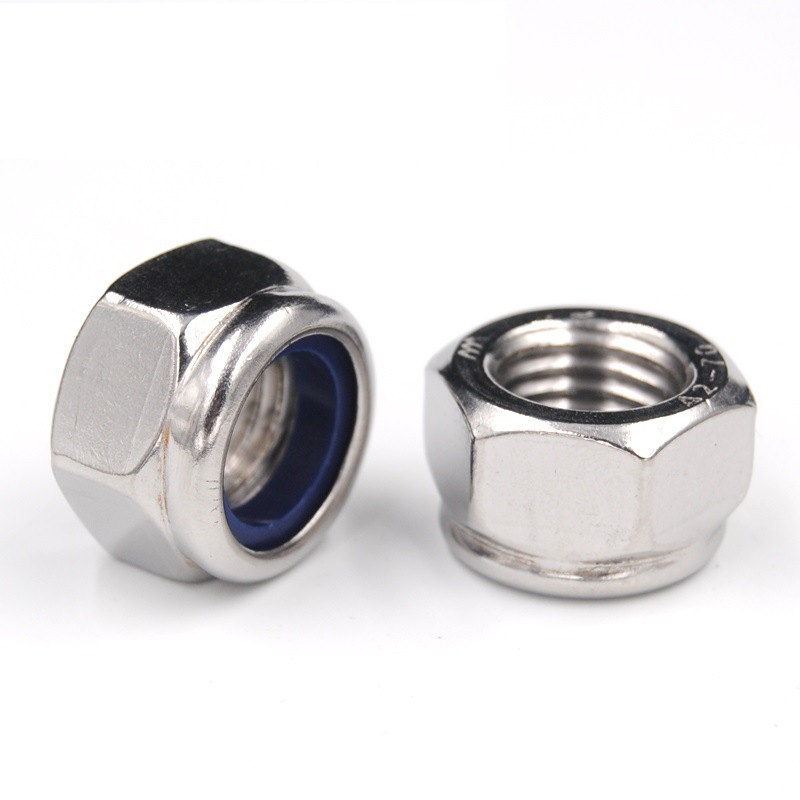
Engineers design the unthreaded polymer ring carefully. They manufacture it to precise dimensions. The inner diameter is noticeably smaller than the bolt major threads. When you begin assembly, the metal meets this undersized ring. The size discrepancy creates immediate mechanical interference. This interference requires physical effort to overcome. It represents an intentional design choice. The fastener relies entirely on this size difference.
When metal meets polymer, elastic deformation begins. The hardened metal cuts into the softer ring. It does not destroy the polymer material. The synthetic material yields under pressure. It stretches to accommodate the metal profile. Because it is highly elastic, the material constantly attempts to shrink back. It wants to return to its original undersized shape. This continuous shrinking action creates heavy, omnidirectional friction. We call this constant friction the locking mechanism. It grips the metal securely. It prevents the hardware from vibrating loose over time.
You must learn to evaluate this rotational resistance accurately. Differentiating between functional drag and mechanical failure is vital. Normal stiff turning feels consistent. The drag remains smooth and uniform as you rotate the wrench. Functional resistance requires steady effort but never suddenly halts. Abrupt stopping indicates a critical problem. If your wrench binds suddenly, you likely crossed the threads. Pitch mismatch also causes immediate lockups. Stop turning immediately if you hit a hard wall of resistance.
2. Tooling Selection for Bolt and Nut Assembly
Using high-speed power tools introduces severe implementation risks. Impact drivers rotate hardware extremely fast. This rapid rotation generates massive amounts of friction heat. The heat transfers directly into the synthetic collar. The polymer softens rapidly under high temperatures. Friction-induced heat permanently reduces its grip. A melted collar defeats the entire purpose of the fastener. You ruin the joint integrity before the machine ever leaves the shop.
Choosing the correct manual equipment prevents thermal damage entirely. We recommend categorizing your equipment clearly to streamline your bolt and nut assembly.
Holding Tools: You must keep the bolt head strictly stationary. Box-end wrenches provide excellent grip for this task. Locking pliers also secure the back side effectively. Stopping the back side from spinning prevents thread damage.
Driving Tools: Use ratcheting socket wrenches for controlled rotation. They allow steady, manual turns. Combination wrenches also work well for final torque applications. Manual tools give you essential tactile feedback.
Space constraints often complicate maintenance tasks. Evaluate your accessibility before you begin turning wrenches. Sometimes manual rotation is impossible. Tight clearances block standard wrenches. If you must use power tools, establish strict parameters. Use only low-RPM power tools. You must use highly sensitive clutch settings. Keep rotational speeds to an absolute minimum. Slow rotation prevents heat buildup. It protects the synthetic ring from thermal degradation.
3. Step-by-Step: How to Tighten a Nylon Lock Nut Correctly
Proper installation begins long before you apply heavy tools. Start the fastener entirely by hand. Spin it down the threads until it reaches the synthetic ring. This usually requires two to three full rotations. Initial hand-threading ensures the metal seats properly. It physically prevents cross-threading at the start. You can feel the thread alignment perfectly through your fingers.
Next, execute a coordinated dual-wrench technique. Secure the back side firmly to prevent spinning. Apply steady, uninterrupted manual force to the front fastener. Do not jerk the handle. Jerky movements cause uneven friction spikes. Smooth motion keeps the temperature low. Understanding exactly how to tighten a nylon lock nut comes down to steady pressure. You want continuous movement until the hardware seats against the surface.
Always establish a strict visual confirmation protocol. Industry standards demand a specific visual check for safety. Look closely at the top of the fastened joint. The metal should protrude exactly two to three full threads past the top collar. This visible protrusion guarantees full engagement. It proves the synthetic ring completely surrounds the metal profile. Less than two threads means insufficient grip.
Mitigating risk requires constant attention to tactile feedback. You must stop immediately if the required force spikes exponentially. A sudden force spike before seating indicates severe thread binding. It does not represent functional polymer drag. Binding destroys both pieces of hardware. Back the fastener off immediately. Inspect all surfaces for galling or metal debris.
4. Calculating and Applying the Correct Tightening Torque
Understanding prevailing drag changes how you approach assembly. Prevailing resistance is the force required to turn the fastener freely. You measure this force before the hardware contacts any mating surface. It is caused entirely by polymer friction. The undersized collar grips the metal tightly. You must overcome this grip just to spin the fastener down the shaft. Standard charts do not account for this extra friction.
The calculation framework requires a precise methodology. Follow these exact steps to determine your final specification.
Measure baseline resistance: Use a dial-type or beam-style tool. Read the meter while the fastener is actively moving down the shaft. Record this rotational resistance number.
Determine clamping requirement: Find the standard specification for your specific bolt grade and diameter. This is your target clamping force.
Calculate final value: Add your measured rotational resistance to your target clamping force. Final Specification = Target Clamping Force + Prevailing Resistance.
Friction Coefficient Adjustment Chart
Lubrication State
Friction Coefficient Impact
Torque Adjustment Required
Dry / Unlubricated
Baseline friction
Use calculated specification
Anti-seize Applied
Significantly reduced friction
Reduce target by 20% to 30%
Applying the correct tightening torque ensures a reliable, safe joint. You must also evaluate material variables carefully. Lubricants alter the underlying friction coefficient drastically. Anti-seize compounds make the metal very slippery. They reduce the turning drag significantly. If you apply lubricants, you must reduce your target specification. Ignoring lubrication factors leads to severe over-stretching. Stretched metal snaps under operational loads.
5. Troubleshooting Common Installation Failures
Thread pitch mismatch represents a massive user error. Technicians often rush and grab mismatched hardware. They force an Imperial fastener onto a Metric shaft. They jam coarse threads onto fine-threaded shafts. The synthetic ring masks the initial mismatch feeling. The user assumes the stiffness comes from the polymer. Always verify ISO, DIN, or SAE specifications before starting. Look at the markings on the head. Pitch mismatch destroys the hardware completely.
Galling happens frequently in stainless steel assemblies. Stainless steel parts suffer from cold-welding under heavy pressure. Combining a stainless bolt with a stainless locking fastener maximizes this risk. The friction from the polymer adds extra heat. Heat and pressure cause the metals to fuse permanently. You must use anti-seize compounds strategically here. You also must use significantly slower turning speeds. Keep the assembly cool to prevent sudden cold-welding.
Crushing mating surfaces ruins otherwise structurally perfect joints. Never rely purely on physical feel when securing these fasteners. The extra drag from the polymer collar masks the true clamping force. You might think you need more pressure to secure the joint. This masking effect results in severe over-torquing. Soft underlying materials suffer massive damage. Aluminum brackets bend permanently. Wooden panels crush deeply under this hidden pressure. Always use precision measuring tools instead of guessing.
6. Compliance and Safety: The Reusability Debate
The engineering standards framework provides extremely strict guidance. Aviation guidelines and mechanical engineering manuals govern hardware reuse policies. A nylon insert lock nut undergoes immense internal stress during its first installation. The polymer collar does not remain pristine. Industry best practices clearly document this degradation.
Loss of elasticity ruins future performance entirely. After the first installation, the polymer suffers permanent plastic deformation. Microscopic tearing occurs along the internal synthetic ring. The material loses its ability to spring back entirely. This permanent damage drastically lowers the prevailing resistance. It will not grip the metal tightly a second time. The joint becomes highly vulnerable to vibration.
Reuse only if measurable prevailing resistance remains.
Next steps require proactive supply chain management. Audit your current fastener inventory immediately. Throw away any used hardware showing degraded polymer rings. Do not mix old parts into new bins. Partner with reliable B2B suppliers. High-quality suppliers ensure consistent batch manufacturing. They guarantee synthetic ring integrity across your entire operation.
Conclusion
Tightening this hardware safely requires controlled force and proper tooling. It demands highly accurate specification adjustments. Mastering these technical elements prevents destructive heat damage. It eliminates thread binding and preserves joint integrity entirely.
The security of a vibration-proof joint relies heavily on fastener quality. Installation technique represents only one half of the final equation. Substandard materials fail regardless of perfect technique. We advise readers to select ISO or DIN certified hardware. Tailor your hardware selections carefully. Match them directly to your specific load and environmental requirements.
Audit your toolkits to remove high-speed impact drivers.
Train maintenance teams on calculating prevailing drag accurately.
Standardize the two-to-three thread protrusion rule across all builds.
Discard any used fasteners from critical load-bearing applications.
FAQ
Q: Why is my nylon lock nut so hard to turn?
A: The top collar is intentionally manufactured with a smaller inner diameter than your bolt. As you turn it, the metal cuts into the polymer. The polymer tries to spring back to its original shape. This elastic deformation creates constant, intentional friction to prevent vibration loosening.
Q: Can I use an impact driver on a nyloc nut?
A: You should avoid impact drivers entirely. High-speed power tools generate extreme friction heat. This heat quickly melts the polymer collar. Once the insert melts or deforms plastically from heat, it permanently loses its grip. It can no longer secure the joint against vibrations.
Q: Do I need a washer with a nylon lock nut?
A: Yes, using a washer is highly recommended. Overcoming the polymer resistance requires extra rotational force. This extra force can cause the metal to score the mating surface. A washer distributes the clamping load evenly. It protects soft underlying materials from deep gouges during installation.
Q: How far should the bolt stick out of a nylon nut?
A: Industry standards require a specific visual check for full engagement. The bolt should protrude exactly two to three full threads past the top of the polymer ring. This ensures the locking mechanism fully encapsulates the metal threads for maximum holding power.