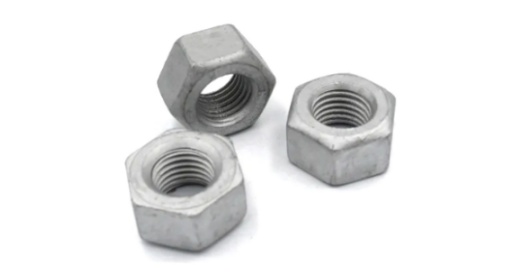
Standard fasteners rarely grab headlines. Yet they act as critical components for maintaining preload in complex machinery and sheet metal assemblies. Treat them as basic commodity hardware at your own peril. Joint failure rarely happens because of sudden tensile overload. Instead, it predominantly stems from subtle preload loss. This relaxation occurs due to improper nut specification, mismatched thread tolerances, or surface friction inconsistencies. Over time, these small errors trigger catastrophic structural failures. This technical guide delivers a rigorous evaluation framework. You will learn how to align performance classes and manage surface coatings effectively. We designed this resource to help engineers and procurement teams correctly specify, source, and troubleshoot the DIN934 hex nut in demanding environments.
Key Takeaways
Grade Matching Rule: A metric hex nut must always have a performance class equal to or greater than its mating bolt (e.g., an 8.8 bolt requires a Class 8 hex nut).
Dimensional Nuances: DIN 934 features distinct product grades based on size (Grade A for ≤M16; Grade B for >M16) and specific chamfering profiles.
Surface Treatment Boundaries: Coating selection dictates performance. For example, black oxide is strictly for dry environments, while Hot Dip Galvanizing (HDG) requires specific thread tolerance adjustments.
Application Limits: Standard DIN934 hexagon nuts require precise torque control and may necessitate alternatives (like DIN 985 nylon-locking nuts) in high-vibration applications.
Engineering Specifications: The 6-Dimension Evaluation Framework
You need a rigorous technical baseline to evaluate vendor compliance. Suppliers often claim their parts meet international standards. You must verify these claims using objective data. We use a 6-dimension evaluation framework to confirm part suitability. This protects your assembly line from sub-standard hardware.
Dimensional & Tolerance Standards (6H)
The DIN 934 standard covers a massive size range. It dictates specifications for sizes from M1 all the way up to M160. However, the standard divides these sizes into two distinct product grades. You must specify the correct transition boundary on your engineering drawings. Product Grade A applies to sizes up to M16. These smaller sizes require tighter manufacturing controls. Product Grade B applies to sizes over M16.
Visual and geometric compliance also shifts based on size. M16 nuts and below feature distinct double chamfers. They have angled cuts on both the top and the bearing face. Sizes M20 and above often look different. They may feature a flat washer face on one side and a chamfered face on the other. You must inspect these faces during incoming quality control. A missing washer face on a large nut ruins load distribution.
Chemical Composition & Heat Treatment Limits
Material chemistry dictates ultimate performance. You cannot achieve high proof loads without strict chemical boundaries. Let us examine the allowable limits for carbon steel variants. Carbon provides raw hardness. Manganese increases toughness and hardenability. Phosphorus and Sulfur act as impurities. They improve machinability but cause brittleness if uncontrolled.
Carbon: Maximum limits vary. Class 10 nuts allow up to 0.58% carbon.
Manganese: You need at least 0.30% manganese to ensure structural toughness.
Phosphorus: Keep this below 0.048% to prevent cold brittleness.
Sulfur: Keep this below 0.058% to prevent tearing during thread tapping.
Hardness & Proof Load Baselines
Hardness directly correlates to thread stripping resistance. You must verify Rockwell hardness during batch testing. For instance, Class 10 nuts (size M5 and larger) require a Rockwell hardness of C26 to C36. If a batch tests below C26, the internal threads will strip under tension.
Proof load expectations verify load-bearing claims. The proof load is the maximum tensile force the nut can withstand without plastic deformation. We expect a baseline of 1050 N/mm² for Class 10 nuts in the M12 to M16 range. Testing labs pull a hardened bolt through the nut to verify this exact metric.
Material and Surface Selection Matrix
Engineers must map environmental realities to material tiers. Over-specification wastes capital. Premature corrosion failure destroys equipment. You must choose the correct core material and the optimal surface coating. This matrix guides your selection process.
Carbon Steel & Class Ratings
Standard carbon steel dominates industrial fastening. We categorize these by performance classes. Class 6 offers basic strength for non-critical framing. It handles low-stress static loads. We consider the Class 8 hex nut the industrial median for high-tensile fastening. It pairs perfectly with 8.8 bolts. Class 10 provides extreme strength for heavy machinery and pressurized piping.
Stainless Steel (Austenitic)
Corrosive environments demand austenitic stainless steel. Standard steel will rust immediately. You must choose between two primary grades. A2-70 (similar to 304 stainless) provides excellent general resistance. It works well for food processing and clean outdoor environments. A4-70 (similar to 316 stainless) adds molybdenum. This addition resists pitting and crevice corrosion. You must specify A4-70 for marine and harsh chemical applications.
Surface Coating Boundaries & Procurement Warnings
Core materials require protective coatings. Coating selection dictates field performance. Each finish has strict application boundaries.
Surface Treatment
Characteristics & Application Limits
Procurement Warning
Plain Finish
High compatibility, lowest cost, zero corrosion resistance. Requires active lubrication.
Do not specify for any outdoor or humid environment. Parts will rust in transit if unprotected.
Zinc Plated (ZP)
Thin protective coating. Perfect for indoor machinery assembly. Good visual appeal.
Protection fails quickly when exposed to weather or salt spray.
Hot Dip Galvanized (HDG)
Thick, robust coating. Built for heavy outdoor corrosion and structural steel.
Dark aesthetic finish. Leaves a slight oil residue.
Often mistakenly specified for corrosion resistance. It only works in strictly dry environments.
Assembly Pain Points and Implementation Countermeasures
Even perfectly specified parts fail if assembled incorrectly. We see these failures constantly in the field. Demonstrating operational expertise requires addressing field-level installation failures. Let us look at the three most common assembly pain points and their countermeasures.
Preload Relaxation ("Feels tight but loosens")
Technicians often complain a joint feels tight during assembly, but loosens weeks later. This happens due to friction inconsistency. Mixed-supplier batches have different surface conditions. Varying friction changes how torque translates to clamping force. Embedment loss also causes relaxation. This occurs when rough surfaces flatten under high pressure.
Countermeasure: You must mandate strict surface friction coefficients from your suppliers. We also recommend mandating compatible hardened washers. Washers distribute the load and prevent surface embedment. Finally, verify your torque-to-yield equations using a tension calibrator.
Thread Stripping and Cross-Threading
Cross-threading halts assembly lines instantly. Technicians force mismatched pitches together. They might mix coarse threads with fine threads. Out-of-spec chamfering also prevents smooth thread engagement. The nut grabs the bolt at an angle and destroys the internal threads.
Countermeasure: Implement strict Go/No-Go gauge verification upon intake. Quality control teams must test every batch. If the No-Go gauge enters the thread, reject the batch immediately. You must also train technicians to thread parts by hand for the first three turns before using pneumatic tools.
Stainless Steel Galling (Cold Welding)
Galling represents a massive headache for stainless steel joints. Austenitic stainless steel generates immense friction during rapid installation. The thread profiles literally cold-weld together. Once a joint galls, you cannot loosen or tighten it. You must cut the fastener off entirely.
Countermeasure: You must control tool RPM during automated assembly. Heat builds up too quickly at high speeds. Specify anti-seize lubricants for all stainless joints. If environmental constraints allow, utilize dissimilar material pairings. For example, pair a coated steel nut with a stainless bolt. The different metallurgical properties prevent cold welding.
Evaluating Alternatives: When NOT to Specify a Standard DIN934 Hex Nut
True engineering expertise involves knowing when standard geometry fails your use case. You must provide an objective pros and cons assessment. Sometimes, you need to guide users toward specialty variations.
Limitations of Standard DIN 934
The standard DIN934 hexagon nut relies heavily on precise torque. It generates friction against the bearing surface to stay tight. It is not inherently vibration-resistant. Thermal cycling and dynamic loads will loosen it over time. It also proves inadequate for applications with severe spatial constraints. Furthermore, it struggles under massive lateral shear forces without proper flange support.
Shortlisting Alternatives by Application
When the standard version fails, you must select the right alternative. Review this application-based shortlist before finalizing your bill of materials.
For high vibration environments: Select DIN 985 (Nylon insert locking) or DIN 980 (All-metal locking). The nylon insert grips the bolt threads. The all-metal version deforms slightly to create a friction lock.
For load distribution and sealing: Specify DIN 6923 (Hex flange nut). The built-in flange increases the bearing-to-stress ratio. It eliminates the need for separate washers.
For heavy chassis and piping: Choose DIN 6334 (Thick hex nut). The extended thread length handles massive tensile loads without stripping.
For spatial limitations and lock-nut setups: Utilize DIN 936 (Thin hexagon nut). Technicians use these as jam nuts to lock a primary nut in place. They fit perfectly inside tight clearance envelopes.
Buyers need a tangible framework to execute a safe purchase. A reliable purchase prevents catastrophic failures down the line. Procurement teams must move beyond simple price comparisons. You must validate vendor credibility using strict engineering parameters.
The Grade Matching Rule
We cannot stress this rule enough. Purchasing must align fastener grades properly. The nut grade must be equal to or greater than the bolt grade. For example, pair a 10.9 bolt with a Class 10 nut. Never pair it with a Class 8 nut. This ensures joint safety. Under extreme stress, the bolt should stretch and fail before the nut threads strip. A stretching bolt gives visual warning. A stripping nut fails instantly and catastrophically.
PO Specification Clarity
Vague purchase orders lead to disastrous deliveries. You must demand clarity on thread series. Never assume standard pitches. Clearly denote coarse threads versus the metric hex nut fine thread series. Fine threads provide higher tensile strength. They also resist vibration better. Furthermore, you must define coating thickness limits. If you order hot-dip galvanized parts, explicitly state the overtapping requirement on the PO.
Documentation Requirements
Trust but verify. Shortlist suppliers who willingly provide extensive documentation. You should demand raw material mill test reports (MTRs) for every shipment. These reports prove the chemical composition meets the standard. You must also demand batch-level dimensional inspection data. This proves the factory actually measured the chamfers, thread pitches, and across-flats dimensions.
Conclusion
We highly recommend reviewing your current stock against these guidelines. Standard hex nuts perform flawlessly when specified correctly. However, their reliability depends entirely on strict adherence to the rules. You must enforce grade matching at the procurement level. You must respect surface treatment boundaries based on environmental exposure. Finally, you must ensure precise torque application during assembly.
Take action today to prevent future joint failures. We suggest conducting a localized audit of current assembly issues. Look for signs of galling, cross-threading, and preload loss on the factory floor. Do this before re-ordering your standard bulk stock. If you discover persistent failures, contact your engineering support team immediately. Ask them for a review of specific joint designs. Request comprehensive data sheets to guide your next procurement cycle.
FAQ
Q: Is DIN 934 interchangeable with ISO 4032?
A: While functionally similar and often treated as interchangeable, they are not identical. ISO 4032 has slightly different across-flats dimensions for specific sizes (e.g., M10, M12, M14). Manufacturing BOMs must specify the exact standard to avoid tool-fitment issues on the assembly line.
Q: Can a lower-grade nut be used with a higher-grade bolt if torque is reduced?
A: No. Engineering standards universally prohibit this. The nut's proof load must always exceed the bolt's ultimate tensile strength to prevent sudden, catastrophic thread stripping.
Q: Why use fine thread metric hex nuts over standard coarse threads?
A: Fine threads offer a larger stress area, providing higher tensile strength and better resistance to loosening under vibration. They are often specified for precision adjustments or automotive applications.