When buyers ask whether a heavy hex nut is suitable for high load industrial environments, they are usually not asking a simple “yes or no” question. What they really want to know is whether this nut style can provide the strength, bearing area, and fastening reliability needed for demanding service such as structural steel, industrial equipment, large flanges, heavy machinery, and other high-stress assemblies. In practical projects, the nut is a small part, but it plays a critical role in load transfer, clamp force, and long-term joint stability. If the wrong nut is selected, even a high-strength bolt can fail to deliver the performance the joint was designed for.
From our perspective as a fastener supplier, heavy hex nuts are often chosen specifically because they offer a larger and thicker nut profile than standard hex nuts. That added size is not just visual—it changes the contact area, thread engagement, and compatibility with high-strength bolting systems. Industry references note that heavy hex nuts are larger and thicker than standard finished hex nuts, and that this heavy pattern is commonly used with large-diameter and high-strength bolts, especially in structural applications. In other words, heavy hex nuts are not “oversized by accident”; they exist because certain applications demand more robust fastening geometry.
What is a heavy hex nut
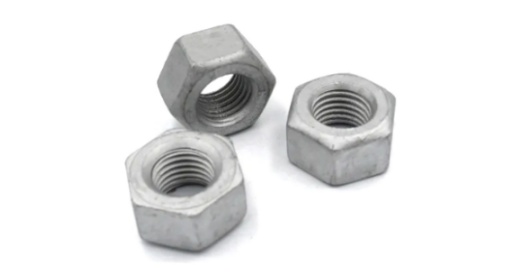
A heavy hex nut is a hex nut with a larger width across flats and greater thickness than a standard finished hex nut. This dimensional difference is recognized in dimensional standards such as ASME B18.2.2, which includes heavy hex nut dimensions, and industry summaries consistently describe heavy hex nuts as larger and thicker than standard hex nuts.
In simple terms:
That extra material is one of the reasons heavy hex nuts are often associated with higher-load and more demanding applications.
Why size matters in high-load environments
In heavy-duty assemblies, the nut does more than “hold the bolt in place.” It must:
engage the bolt threads securely
maintain clamp load under stress
distribute load into the connected surface
work reliably with the selected bolt grade
Because heavy hex nuts are thicker and have a larger bearing surface, they are often preferred where higher loads and stronger bolt systems are involved. Industry descriptions specifically note that the heavy pattern is typically used for large-diameter and high-strength bolts.
That does not mean every high-load application automatically requires a heavy hex nut. But it does mean that when the joint is designed for higher preload, larger fastener diameters, or structural-duty performance, heavy hex nuts are commonly the more suitable option.
The role of standards in heavy hex nut selection
A key reason heavy hex nuts are trusted in demanding applications is that they are commonly tied to recognized standards for dimensions and mechanical requirements.
Dimensional standard
Heavy hex nut dimensions are commonly governed by ASME B18.2.2, which defines the heavy hex pattern.
Mechanical specification
For many carbon and alloy steel nut applications, buyers reference ASTM A563, which covers the chemical and mechanical requirements for carbon and alloy steel nuts used on bolts, studs, and externally threaded fasteners.
This is important because in high-load environments, buyers are not only selecting a nut shape—they are selecting a nut pattern + material grade + mechanical performance level.
Are heavy hex nuts actually suitable for high load use
In many industrial cases, the answer is yes, provided they are correctly specified and matched to the application.
Heavy hex nuts are widely used in demanding service because they can offer:
greater bearing area than standard hex nuts
a thicker nut body for robust thread engagement
compatibility with higher-strength bolting assemblies
a more established fit with structural and heavy-duty fastening practice
Industry sources also note that certain heavy hex nut grades, such as ASTM A563 Grade DH, are commonly used with compatible structural bolts and heavy hex bolt assemblies.
So in practical terms, if your assembly involves structural steel, high-strength bolts, or large-diameter fasteners under significant load, heavy hex nuts are often not only suitable—they are often the expected choice.
Typical applications where heavy hex nuts are commonly used
Heavy hex nuts are commonly selected in applications such as:
structural steel connections
industrial equipment frames
high-strength bolted assemblies
heavy machinery
flange and stud-bolt systems in certain industrial settings
infrastructure and construction hardware
Industry references also describe the heavy pattern as typical for structural applications and large-diameter/high-strength bolting.
These are environments where joint reliability matters more than minimizing nut size or cost per piece.
Heavy hex nut vs standard hex nut
To understand suitability, it helps to compare the two directly.
Feature | Heavy Hex Nut | Standard Hex Nut |
Outside size | Larger | Smaller |
Thickness | Greater | Less |
Bearing surface | Larger | Smaller |
Typical use | High-strength, structural, larger diameter assemblies | General-purpose fastening |
Common duty level | More demanding industrial loads | Standard commercial or mechanical loads |
Industry summaries consistently state that heavy hex nuts are larger and thicker than standard hex nuts.
This comparison does not mean a standard hex nut is “weak.” It means each nut style is intended for a different level of mechanical demand and fastening geometry.
Strength grade matters as much as nut style
One of the most common purchasing mistakes is assuming that a heavy hex shape alone guarantees high-load performance. It does not.
A heavy hex nut must still be chosen in the correct material and grade for the bolt and service condition. ASTM A563 includes multiple grades, and industry sources commonly reference grades such as A, C, and DH depending on the required performance level.
For example:
lower-demand applications may use lighter-duty grades
higher-strength structural assemblies often use grades intended for stronger bolting systems
specific environments may require additional finish or corrosion considerations
So the correct way to think about it is:
Bolt compatibility is critical
A heavy hex nut is usually part of a system, not a standalone decision. Industry references on structural bolting show that heavy hex nuts are commonly paired with structural heavy hex bolts and compatible bolt specifications.
This means buyers should always confirm:
If the nut is stronger, weaker, or dimensionally mismatched to the bolt system, the joint may not perform as intended.
Why heavy hex nuts are often preferred in structural and industrial joints
From a practical engineering perspective, buyers often choose heavy hex nuts for high-load environments because they support more robust assembly behavior.
1 Larger bearing surface
A larger contact area can help distribute the clamping force over the connected surface more effectively than a smaller pattern.
2 More robust geometry
The thicker body and larger outside dimensions generally make heavy hex nuts feel better suited to larger, stronger fastener systems.
3 Better fit with structural bolt assemblies
Heavy hex nuts are commonly used in structural bolting systems, where consistency and compatibility are especially important.
4 Strong market acceptance
Because heavy hex nuts are already widely used in industrial and structural projects, many buyers prefer them for standardization and specification consistency.
Closing thoughts
So, are Heavy Hex Nuts suitable for high load industrial environments? In many cases, yes. Because heavy hex nuts are larger and thicker than standard hex nuts, and because they are commonly used with large-diameter and high-strength bolt systems, they are often a practical and proven choice for structural and heavy-duty industrial fastening. But the right answer depends on more than the nut shape alone. True suitability comes from matching the heavy hex pattern with the correct grade, correct bolt compatibility, and the actual load requirements of the joint.
At Ningbo Topbolt Metalworks Co., Ltd., we understand that high-load fastening is about reliability, not just hardware appearance. If you are evaluating heavy hex nut options for industrial equipment, structural assemblies, or other demanding applications, we are glad to help you review the specification details that matter most. You are welcome to learn more through Ningbo Topbolt Metalworks Co., Ltd. and contact our team for product information and selection support.
FAQ
1) What is the main difference between a heavy hex nut and a standard hex nut
A heavy hex nut is larger and thicker than a standard hex nut, giving it a heavier pattern commonly used for larger and higher-strength bolting applications.
2) Are heavy hex nuts used in structural applications
Yes. Industry references note that the heavy hex pattern is typically used with high-strength bolts and in structural applications.
3) Does a heavy hex nut automatically mean high strength
No. The heavy pattern helps, but the actual performance depends on the nut’s material grade and its compatibility with the bolt system.
4) How do I choose the right heavy hex nut
Match the nut to the bolt diameter, bolt grade, required nut grade, dimensional standard, and the real load condition of the assembly.


