When buyers compare fasteners, the difference between a heavy hex nut and a regular hex nut may look minor at first glance. Both are six-sided nuts, both thread onto bolts or studs, and both are used to clamp parts together. But in real applications, that small difference in shape and mass can matter a lot. It can affect wrench size, bearing surface, proof load, installation space, and the type of project the fastener is suited for. That is why in structural steel, flange work, and high-strength bolting, the heavy hex nut is often specified instead of a standard or finished hex nut.
From our perspective as a fastener manufacturer, the most practical way to understand this topic is simple: a heavy hex nut is larger and slightly thicker than a regular hex nut of the same nominal thread size. Under ASME B18.2.2 sizing, heavy hex nuts have larger dimensions across the flats and corners, and this larger pattern provides greater bearing surface and is commonly paired with high-strength bolting applications.
1 What Is a Regular Hex Nut?
A regular hex nut is often referred to in the market as a standard hex nut or finished hex nut. It is the common six-sided nut used in many general-purpose fastening applications. Compared with a heavy hex nut, it has a smaller width across the flats and corners, and it is also thinner for the same nominal thread size.
Regular hex nuts are widely used because they:
fit compact spaces more easily
use smaller wrenches or sockets
are suitable for many general industrial and commercial assemblies
are often more economical for standard-duty applications
In short, a regular hex nut is the more compact, general-purpose choice.
2 What Is a Heavy Hex Nut?
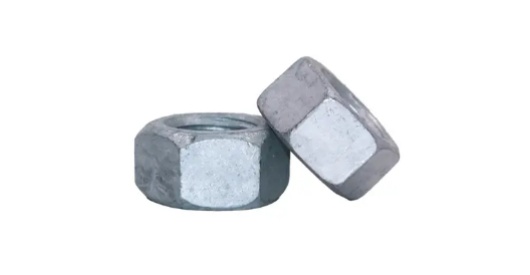
A heavy hex nut is a larger-pattern hex nut made with increased outside dimensions. Compared with a regular hex nut of the same thread diameter, it is:
wider across the flats
wider across the corners
slightly thicker
This larger pattern is not just for appearance. It increases the nut’s bearing surface and provides a heavier, more robust geometry that is commonly used in high-strength and structural bolting applications.
Many heavy hex nuts are manufactured to ASME B18.2.2 dimensional standards, and heavy hex patterns are widely associated with ASTM A563 and ASTM A194 nut specifications in structural and industrial use.
3 The Main Difference in Size
The biggest difference between heavy hex and regular hex is physical size. For the same nominal thread diameter, the heavy hex nut is larger and thicker.
A commonly cited rule in the fastener industry is that a heavy hex nut is 1/8 inch larger across the flats than a standard hex nut of the same nominal size, and it therefore requires a correspondingly larger socket or wrench.
Quick size comparison
Feature | Regular Hex Nut | Heavy Hex Nut |
Width across flats | Smaller | Larger |
Width across corners | Smaller | Larger |
Thickness | Thinner | Slightly thicker |
Wrench/socket size | Smaller | Larger |
Bearing surface | Smaller | Greater |
This dimensional difference is the reason heavy hex nuts are often chosen when higher clamp demands or structural specifications are involved.
4 Why the Larger Size Matters
A heavy hex nut’s larger body changes how it performs in real assemblies.
A Greater bearing surface
Because the nut is wider across the flats, it provides a larger contact area against the connected surface. This larger bearing area helps distribute clamping force over a broader zone. Westfield’s specification summary notes that heavy hex nuts are wider across the flats and therefore provide a greater bearing surface than standard full hex nuts.
B Higher proof-load potential in practice
The larger pattern can support use in more demanding bolted joints, especially where high-strength nut grades are specified. Industry references note that the heavy hex pattern is typically used with large-diameter and high-strength bolts, including structural applications.
C Better fit for structural and flange work
Heavy hex nuts are commonly associated with structural steel connections and certain flange/stud applications where more robust nut geometry is preferred.
So while the difference may look like “just a little bigger,” the functional effect is meaningful.
5 Strength Difference Between Heavy Hex and Regular Hex
This is where many buyers get confused. A heavy hex nut is not automatically “stronger” simply because it is larger. The material grade and specification still determine the actual mechanical properties. However, the heavy hex pattern is commonly used in higher-strength grades and applications because its larger dimensions support those more demanding uses.
For example:
A regular hex nut in a standard grade may be perfectly suitable for general fastening.
A heavy hex nut in a structural grade such as ASTM A563 DH is intended for more demanding applications and is commonly used with high-strength structural bolts.
So the practical answer is:
Regular hex = general-purpose, more compact
Heavy hex = larger pattern, commonly used where higher loads and structural requirements are involved
The size supports the application, but the grade completes the strength story.
6 Application Differences
The easiest way to understand the difference is to compare where each nut is commonly used.
Regular hex nuts are often used for:
general machinery
light to medium industrial assemblies
maintenance and repair work
commercial equipment
applications where space is limited
Heavy hex nuts are often used for:
structural steel connections
high-strength bolting systems
flange bolting and stud applications
large-diameter bolting
projects where specifications explicitly call for heavy hex pattern
Multiple industry references describe heavy hex nuts as the typical choice for structural and higher-stress applications, while finished or standard hex nuts are more common in general-purpose fastening.
Practical application comparison
Application Type | Regular Hex Nut | Heavy Hex Nut |
General assembly | Very common | Less common |
Tight installation space | Better | Less ideal |
Structural steel | Sometimes | Common |
High-strength bolt systems | Less typical | Common |
Large flanges and studs | Less typical | Common |
7 Installation Differences
Because a heavy hex nut is larger, installation is slightly different.
A Larger wrench or socket
A heavy hex nut requires a larger wrench size than a standard hex nut of the same thread diameter. This is one of the most immediate field differences.
B More installation clearance required
The larger outside dimensions mean you need more room around the nut for tool access. In compact assemblies, this can matter a lot.
C Heavier part handling
On large projects, the added mass of heavy hex nuts is usually not a problem, but in volume assembly it can affect storage, handling, and tool planning.
So even when the thread size is the same, the installation environment may decide which pattern is practical.
8 When Should You Choose a Heavy Hex Nut?
A heavy hex nut is often the better choice when:
the specification explicitly requires it
you are working with structural bolts
the assembly uses high-strength stud or bolt systems
greater bearing area is desired
the application is high-load or safety-critical
Heavy hex nuts are especially common when the design standard or project documents call for ASTM or ASME structural-style fastening combinations.
Choose heavy hex when:
the design already accounts for the larger nut size
Final Thoughts
So, what is the difference between heavy hex and regular hex? The core difference is size: a heavy hex nut is wider across the flats and corners and is slightly thicker than a regular hex nut of the same nominal thread size. This larger pattern gives it more bearing surface, requires a larger wrench, and makes it a common choice for structural and high-strength bolting applications. A regular hex nut, by contrast, is smaller, lighter, and more suitable for general-purpose fastening where compactness and standard assembly are the priority.
At Ningbo Topbolt Metalworks Co., Ltd., we understand that the right nut pattern matters just as much as the right thread and grade. If you are selecting a heavy hex nut for structural, industrial, or project-based fastening, clear dimensional matching and application fit are essential. We welcome you to learn more about suitable fastener options from Ningbo Topbolt Metalworks Co., Ltd.
FAQ
1) Is a heavy hex nut stronger than a regular hex nut?
A heavy hex nut is larger and often used in higher-strength applications, but actual strength still depends on the nut’s material grade and specification. The larger pattern mainly provides more bearing surface and supports structural-style use.
2) Does a heavy hex nut need a different wrench size?
Yes. Because a heavy hex nut is larger across the flats, it requires a larger socket or wrench than a regular hex nut of the same nominal thread size.
3) Where is a heavy hex nut commonly used?
A heavy hex nut is commonly used in structural steel, high-strength bolt assemblies, and certain flange or stud applications where a larger, heavier nut pattern is specified.
4) Can I replace a regular hex nut with a heavy hex nut?
Not always. Even if the thread matches, the larger outside dimensions may affect tool clearance, fit, and specification compliance. Always check the drawing and project standard first.


