In bridge construction and large structural projects, the smallest components often carry the biggest responsibility. Engineers may focus on beams, columns, plates, and foundations, but the performance of the entire system also depends on the reliability of the fasteners that hold those elements together. That is where the heavy hex nut becomes especially important. In high-load structural assemblies, ordinary fastening components are not always enough. Connections in bridges, towers, industrial frameworks, steel plants, and other large structures must withstand not only static weight, but also vibration, wind, temperature change, repeated loading, and long-term environmental exposure. A fastening solution in these projects must provide strong clamping force, stable engagement, and dependable compatibility with high-strength bolts and washers.
From our experience in structural fastener supply, the heavy hex nut is widely used because it offers a larger and stronger bearing profile than standard hex nuts, making it better suited for demanding structural joints. Its heavier geometry supports high-strength bolting systems and helps improve connection stability in critical applications. At Ningbo Topbolt Metalworks Co., Ltd., we work with customers who need fastening solutions for structural steel, infrastructure, and industrial construction.
What is a heavy hex nut?
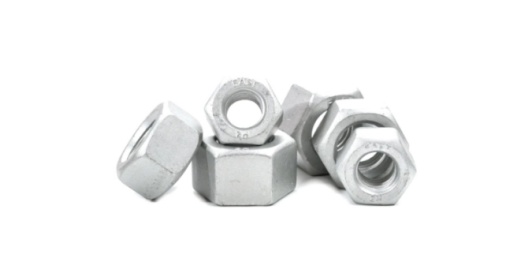
A heavy hex nut is a hexagonal nut with a larger width across flats and a thicker overall profile than a standard hex nut of the same nominal size. In practical structural use, this means:
more bearing surface
greater thread engagement
stronger compatibility with high-strength bolts
improved performance in demanding joints
Because of these features, heavy hex nuts are commonly used in structural bolting systems where the connection must carry substantial load and maintain clamping force over time.
Why heavy hex nuts are used in structural applications
The main reason heavy hex nuts are chosen in bridges and large structures is simple: the connection requirements are more demanding. Structural joints in these environments must perform under:
high tensile loads
dynamic stress and vibration
repeated loading cycles
environmental expansion and contraction
long-term service expectations
A heavier nut profile helps support these demands by providing stronger and more stable engagement with structural bolts. In high-strength bolting systems, that added mass and bearing area can improve load distribution and reduce the risk of local stress concentration at the connection point.
Common applications of heavy hex nuts in bridges
Bridges are one of the most important application areas for heavy hex nuts because bridge connections often involve large steel members, long spans, and heavy service loads.
1 Steel beam and girder connections
In steel bridge systems, major members such as girders and beams are joined using high-strength bolts and matching heavy hex nuts. These connections must remain stable under constant load, vehicle vibration, and weather changes.
2 Splice plate assemblies
Where long steel members are joined with splice plates, fastening systems must create strong clamping force across thick plate assemblies. Heavy hex nuts are commonly used here because they are well-suited to high-strength bolting arrangements.
3 Bridge support structures and bracing
Cross-bracing, support frames, and reinforcement zones often require robust fasteners to help resist movement, twisting, and load transfer. A heavy hex nut supports these high-load structural fastening points effectively.
4 Maintenance and retrofit structural bolting
In bridge strengthening and repair projects, replacement or reinforcement bolting often uses heavy hex nut systems because they are associated with heavy-duty structural performance and reliable field installation.
Heavy hex nuts in other large structures
Beyond bridges, heavy hex nuts are widely used in many other large-scale structural applications.
1 Steel buildings and industrial frames
Large industrial buildings, plant structures, and steel frame facilities often use heavy hex nuts in column-to-beam joints, support frames, and large base connections.
2 Towers and utility structures
Transmission towers, communication structures, and heavy support towers rely on strong mechanical joints. Heavy hex nuts are commonly selected where structural integrity and long service life are priorities.
3 Heavy equipment foundations
Large machinery supports and equipment mounting assemblies often require high-strength fasteners. Heavy hex nuts help secure those systems where load concentration is high.
4 Energy and infrastructure projects
Substation structures, power installations, and other infrastructure frameworks often use heavy hex nuts because of their compatibility with structural bolting systems.
Why heavy hex nuts are preferred over standard hex nuts in these projects
In structural work, standard hex nuts may not always offer the same level of performance margin required for high-strength bolted joints. A heavy hex nut is often preferred because it offers practical advantages in demanding assemblies.
Key advantages
Advantage | Why It Matters in Bridges and Large Structures |
Larger bearing surface | Helps distribute load more effectively at the joint |
Greater thickness | Supports stronger thread engagement |
Better compatibility with structural bolts | Commonly used in high-strength bolting systems |
More robust profile | Suited for heavy-duty structural assemblies |
Improved connection confidence | Helps support long-term structural reliability |
These advantages are especially relevant in projects where the fastener is not just holding parts together, but maintaining the integrity of a critical structural connection.
How heavy hex nuts support connection stability
A structural connection works best when bolt, nut, and washer function together as one complete fastening system. In many bridge and large-structure applications, heavy hex nuts help by:
maintaining stable clamping force
supporting stronger thread engagement under load
working effectively with hardened washers
helping distribute compression at the joint surface
This makes them an important part of structural bolting systems where connection reliability directly affects overall performance.
Typical structural fastening combinations
Heavy hex nuts are often used as part of a complete fastening assembly rather than as a standalone component.
Common combination
This combination is widely used because each component supports the others:
the bolt provides clamping force
the washer helps distribute load and protect the bearing surface
the heavy hex nut provides secure thread engagement and tightening stability
Performance requirements in bridge and structural projects
In large structural projects, a heavy hex nut must do more than fit the bolt. It must match project demands in several key areas.
Important performance factors
Material grade compatibility with the bolt
Dimensional consistency for installation and inspection
Thread accuracy for proper engagement
Surface finish or coating suited to the project environment
Strength level matched to the structural bolting system
If these factors are not aligned, even a strong-looking nut may not perform correctly in the full assembly.
Table: What buyers should check when selecting heavy hex nuts
Item to Check | Why It Matters |
Bolt compatibility | The nut must match the bolt grade and thread specification |
Dimensions | Consistent size improves installation accuracy and fit |
Material and strength level | Must suit the structural load requirements |
Surface treatment | Helps match environmental exposure conditions |
Application environment | Bridges, towers, and industrial sites may require different protection levels |
Standards compliance | Important for structural and project documentation requirements |
A heavy hex nut is a structural component, so specification accuracy is just as important as raw strength.
Environmental demands in bridges and large structures
Bridges and large outdoor structures are exposed to conditions that can affect fastener life, including:
rain and moisture
temperature changes
vibration and cyclic loading
industrial pollution or coastal conditions
long inspection and maintenance intervals
That is why buyers often evaluate not only nut geometry, but also material selection and surface protection. In many projects, the nut must maintain performance over long service periods with limited replacement access.
Closing thoughts
The heavy hex nut plays a critical role in bridges and large structures because it supports the kind of high-strength fastening systems these projects demand. Its larger, thicker geometry makes it well suited to structural joints where load, vibration, environmental exposure, and long service life all matter. In steel bridge connections, splice plates, support frames, towers, and other large structural assemblies, heavy hex nuts help provide the thread engagement, clamping stability, and fastening reliability that critical infrastructure depends on.
At Ningbo Topbolt Metalworks Co., Ltd., we understand that structural fasteners are not just hardware—they are essential connection components in systems where safety, consistency, and long-term performance matter. If you are sourcing heavy hex nut products for bridges, steel structures, or industrial construction projects, you are welcome to learn more through Ningbo Topbolt Metalworks Co., Ltd. and contact our team for product information and project support.
FAQ
1) What is a heavy hex nut used for in bridge construction?
A heavy hex nut is commonly used in high-strength structural bolting systems for bridge members such as girders, splice plates, bracing, and reinforcement connections where strong and stable fastening is required.
2) Why are heavy hex nuts preferred in large structures?
They are preferred because their larger and thicker design provides greater bearing surface, stronger thread engagement, and better suitability for heavy-duty structural joints.
3) Are heavy hex nuts used only in bridges?
No. Heavy hex nuts are also widely used in steel buildings, towers, industrial frameworks, equipment foundations, and other infrastructure projects that require strong structural fastening.
4) What should I check before buying heavy hex nuts for structural projects?
You should check bolt compatibility, material grade, dimensional consistency, strength level, surface treatment, and whether the nut meets the specifications required for the project environment and fastening system.


