In marine and demanding outdoor environments, the structural integrity of a massive assembly often relies entirely on a fractional-cent fastener. We frequently overlook these tiny components until they fail catastrophically. Standard steel or improperly graded hardware inevitably leads to rapid oxidation, severe pitting, and eventual joint failure when exposed to saltwater, heavy humidity, and relentless UV breakdown. Using the wrong alloy jeopardizes safety and forces emergency repairs. You cannot afford to treat these crucial connections as mere afterthoughts. This comprehensive guide transitions buyers from general fastening assumptions to an evidence-based evaluation of stainless steel hardware. We will thoroughly explore specific material grades, vital thread specifications, and long-term maintenance cycles. You will learn exactly how to specify the right components to ensure enduring outdoor performance.
Key Takeaways
Not all stainless steel is suitable for marine use; the presence of molybdenum dictates saltwater survivability.
Selecting the correct grade (A2 vs. A4) directly impacts lifecycle maintenance costs and the prevention of galvanic corrosion.
Installation protocols (like anti-seize applications) are just as critical as the hardware itself to prevent thread galling (cold welding).
Standardizing hex nut specifications across a project ensures predictable torque control and simplified future disassembly.
The True Cost of Fastener Failure in Harsh Environments
Specifying the wrong fastener creates a cascade of financial consequences. We often focus on the upfront unit price of a simple nut. However, the real financial impact emerges during maintenance and repair operations. When inferior hardware rusts and fuses to a bolt, field technicians must spend hours cutting, drilling, and extracting the seized components. You end up paying exorbitant labor rates simply to remove a degraded fastener. Furthermore, equipment downtime compounds these expenses, turning a minor hardware oversight into a major operational disruption.
Marine and outdoor applications introduce severe environmental stressors. Fasteners in these settings face constant assault from unpredictable elements. Saltwater immersion is the most aggressive threat. Coastal air carries microscopic chloride ions deep into thread crevices. Continuous wet and dry cycling further accelerates material breakdown. These conditions easily destroy standard carbon steel and rapidly compromise lower-grade alloys. You must proactively defend structural joints against these relentless forces.
To understand the stakes, we must examine common failure modes. Localized pitting occurs when chlorides attack specific points on the metal surface, creating deep cavities. Crevice corrosion happens inside the narrow gaps between the nut and bolt threads, where stagnant moisture accumulates. Finally, galvanic corrosion occurs when two dissimilar metals interact within an electrolyte like saltwater. One metal acts as an anode and sacrifices itself to the other. These invisible processes silently destroy the clamping force. Eventually, the joint fails completely, compromising structural safety.
Common Mistakes in Environmental Assessment
Ignoring coastal air proximity. Salt spray travels miles inland, affecting structures far from the immediate shoreline.
Underestimating condensation. Trapped moisture inside enclosures causes severe crevice corrosion over time.
Assuming "stainless" means invincible. Different environments demand highly specific metallurgical compositions.
304 vs. 316 Stainless Steel Hex Nut: Selecting the Right Grade
Commercial and marine fastening heavily relies on two dominant stainless steel alloys. Choosing between them determines the survival of your outdoor assemblies. You must match the alloy's metallurgical profile directly to your environmental hazards.
304 (A2) Stainless Steel
The standard 304 stainless steel hex nut serves as an excellent general-purpose outdoor fastener. It offers robust strength and reliable oxidation resistance for typical weather exposure. You will find this grade performing admirably in freshwater applications, general construction, and inland outdoor furniture. However, it possesses a critical limitation. This alloy remains highly vulnerable to pitting in high-chloride environments. You should never deploy it for prolonged saltwater exposure or aggressive chemical washdowns.
316 (A4) Stainless Steel
For uncompromising durability, you need a true marine-grade fastener. The 316 stainless steel hex nut features a specialized composition designed for extreme environments. The secret lies in the molybdenum factor. Adding just 2-3% molybdenum into the alloy provides critical resistance to chloride-induced pitting. This chemical upgrade completely changes the fastener's survivability. Ideal use cases include boat repair, coastal construction, submerged applications, and heavy outdoor industrial equipment. If your project faces salt spray, you must specify this grade.
The A2 A4 Hex Nut Naming Convention
Global procurement requires navigating different terminology systems. North American engineers usually use the SAE 304 and 316 designations. Meanwhile, international metric spec sheets rely on ISO grading. Procurement teams must understand how to map these terms seamlessly. An A2 designation corresponds directly to 304 stainless steel. An A4 designation maps precisely to 316 stainless steel. Whenever you review an international bill of materials, an A2 A4 hex nut request simply asks you to choose between the standard outdoor grade and the premium marine grade.
Alloy Comparison Table
Feature | 304 (A2) Grade | 316 (A4) Grade |
Molybdenum Content | None | 2% to 3% |
Saltwater Resistance | Poor to Moderate | Excellent |
Primary Use Case | Freshwater, inland construction | Marine, coastal, submerged |
Relative Cost | Baseline standard | Premium investment |
Key Evaluation Criteria for Outdoor Fastening Operations
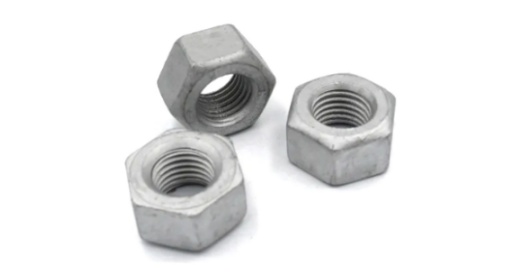
Every physical characteristic of a fastener translates directly into an operational outcome. You evaluate these components not just on material, but on mechanical design. A well-engineered stainless steel hex nut delivers specific benefits during both installation and long-term service.
Standard Six-Sided Ergonomics
The standard hex profile remains the undisputed industry benchmark for a reason. Six flat sides provide optimal torque transfer. This geometry allows wrenches and sockets to grip the hardware securely, distributing force evenly across the flats. It ensures excellent tool accessibility even in tight spaces. You can turn a hex nut by just 60 degrees to engage the next flat. This design prevents tool slip during high-force tightening, protecting the mechanic from injury and the hardware from stripping.
Thread Pitch Selection (Coarse vs. Fine)
Selecting the correct thread pitch significantly impacts assembly speed and vibration resistance.
UNC (Unified National Coarse): Coarse threads feature fewer threads per inch. They allow for rapid assembly in field conditions. A coarse pitch provides greater tolerance for debris and minor thread damage. It drastically reduces the risk of cross-threading when technicians work in difficult, muddy, or underwater environments.
UNF (Unified National Fine): Fine threads provide superior tension and enhanced vibration resistance. They feature a larger minor diameter, offering slightly higher tensile strength. You should deploy fine threads for marine motor mounts and high-vibration equipment, where maintaining precise clamping force is non-negotiable.
Maintenance Lifecycle
You must look beyond the initial installation. A primary feature of high-quality marine hardware is its predictability over decades. When you use premium 316 hardware, you retain the ability to easily remove it years later. It refuses to rust solid. This characteristic facilitates routine hardware inspections and rapid component replacements. You eliminate the need for destructive extraction methods, preserving the integrity of expensive surrounding fixtures.
Implementation Risks: Preventing Galling and Galvanic Corrosion
Procuring excellent hardware only solves half the equation. You must also address the practical, on-site challenges of working with specialized alloys. Poor installation techniques routinely ruin premium fasteners before they ever see a drop of rain.
Thread Galling (Cold Welding)
Stainless steel exhibits a frustrating tendency called thread galling. When you forcefully thread a stainless nut onto a stainless bolt, friction generates intense, localized heat. This heat breaks down the protective oxide layer on the metal. The exposed threads then literally fuse together in a process known as cold welding. Once galled, the nut locks up completely. You can neither tighten nor loosen it; you can only cut it off.
You can prevent galling through strict lubrication protocols. Always use a high-quality nickel-based or specialized marine anti-seize lubricant. Apply it to the bolt threads before threading the nut. Additionally, slow down your installation speed. High-speed impact drivers generate excessive friction, guaranteeing a galled joint. Use manual hand tools for the final tightening phase.
Galvanic Corrosion Management
Marine environments serve as massive, highly conductive electrolytes. When you mix incompatible metals in these settings, you trigger galvanic corrosion. For example, mating a stainless steel nut directly to an aluminum fixture in saltwater creates a disastrous battery effect. The aluminum acts as a sacrificial anode and rapidly corrodes away, leaving the stainless steel intact but completely destroying the mounting point.
You must strictly manage these interactions using physical isolation techniques. Separate incompatible metals using non-conductive nylon washers or specialized dielectric spacers. Coat the joint generously with marine sealants or dielectric greases to block moisture penetration. Breaking the electrical circuit stops the galvanic reaction entirely.
Torque Control
Stainless steel possesses distinct yield strengths compared to standard carbon steel. It generally feels "softer" and more ductile. If you over-tighten it, the threads stretch and deform rather than snapping immediately. You must use properly calibrated torque wrenches to achieve the optimal clamping force. Relying on "feel" usually results in stripped threads or compromised tension. Always consult standardized torque charts specific to the alloy and thread pitch you are installing.
Shortlisting Logic and Procurement Next Steps
Moving from technical understanding to actual procurement requires a strategic approach. You must source hardware that aligns perfectly with your production scale, quality standards, and maintenance workflows.
Scalability & Packaging
Bulk Assortments: Maintenance teams, field technicians, and DIY boaters benefit immensely from structured assortment kits. Having a variety of sizes readily available in a sorted bin eliminates desperate trips to the hardware store during critical repairs.
Single-Size Bulk Bins: OEM assembly lines and large-scale fabricators require a different approach. You should evaluate the business case for purchasing highly specific, single-size bulk bins. This strategy drives down the per-unit cost and ensures uninterrupted production flows.
Compliance and Standards
Never buy fasteners based on vague descriptions. Advise your procurement team to verify strict adherence to international dimensional and material standards. Look for explicit callouts like DIN 934 for standard metric hex nuts, or ANSI/ASME B18.2.2 for imperial sizes. These standards guarantee consistent thread engagement, predictable wrench fit, and reliable structural performance. If a spec sheet lacks standard references, reject the product.
Vendor Red Flags
The fastener market contains numerous misleading products. You must actively warn your teams against specific vendor red flags. Avoid suppliers lacking transparent material testing documentation. Be extremely wary of generic "marine-grade" marketing labels that fail to explicitly confirm 316 or A4 metallurgy. If a vendor cannot provide a clear material test report (MTR) upon request, they cannot guarantee the alloy's molybdenum content. Protect your projects by partnering only with fully transparent, certified manufacturers.
Conclusion
Securing structures in demanding outdoor environments requires precision and uncompromising material quality. We have explored the critical differences between general-purpose alloys and true marine-grade solutions. You now possess the knowledge to specify fasteners that will survive decades of exposure to harsh elements.
Actionable Takeaway 1: Specifying 316/A4 hardware represents an upfront investment in structural longevity, drastically reducing future maintenance liability.
Actionable Takeaway 2: Always apply proper anti-seize lubricants during installation to eliminate the costly risk of thread galling.
Actionable Takeaway 3: Implement strict isolation techniques whenever joining dissimilar metals to prevent aggressive galvanic corrosion.
Actionable Takeaway 4: Standardize your procurement around recognized engineering specifications like DIN 934 to guarantee consistent performance.
Your next step is immediate evaluation. Direct your engineering and maintenance teams to review their current bill of materials. Assess your specific environmental exposure levels carefully. Finally, reach out to certified suppliers to request specific 304 or 316 hardware samples, or demand bulk quotes based on this rigorous evaluation framework.
FAQ
Q: Can I use a 304 stainless steel hex nut in a saltwater environment?
A: No, you should never use 304 stainless steel in a saltwater environment. It lacks molybdenum, making it highly susceptible to rapid chloride-induced pitting and crevice corrosion. For saltwater or coastal applications, 316 stainless steel is strictly required.
Q: What is the difference between an A4 and a 316 stainless steel hex nut?
A: They represent the exact same material class and offer identical performance. A4 is the ISO metric designation commonly used in Europe and international markets, while 316 is the SAE standard widely used in North America.
Q: Why do my stainless steel nuts get stuck halfway down the bolt?
A: This happens due to thread galling, also known as cold welding. Friction from tightening breaks down the metal's oxide layer, causing the threads to fuse together. You must address this by applying a nickel-based anti-seize lubricant before assembly and avoiding high-speed impact tools.
Q: Can I mix stainless steel nuts with galvanized bolts?
A: Mixing them creates a severe risk of galvanic corrosion. The zinc coating on the galvanized bolt will rapidly act as a sacrificial anode when exposed to an electrolyte like saltwater. The zinc will corrode away entirely, ultimately compromising the connection and leading to joint failure.


