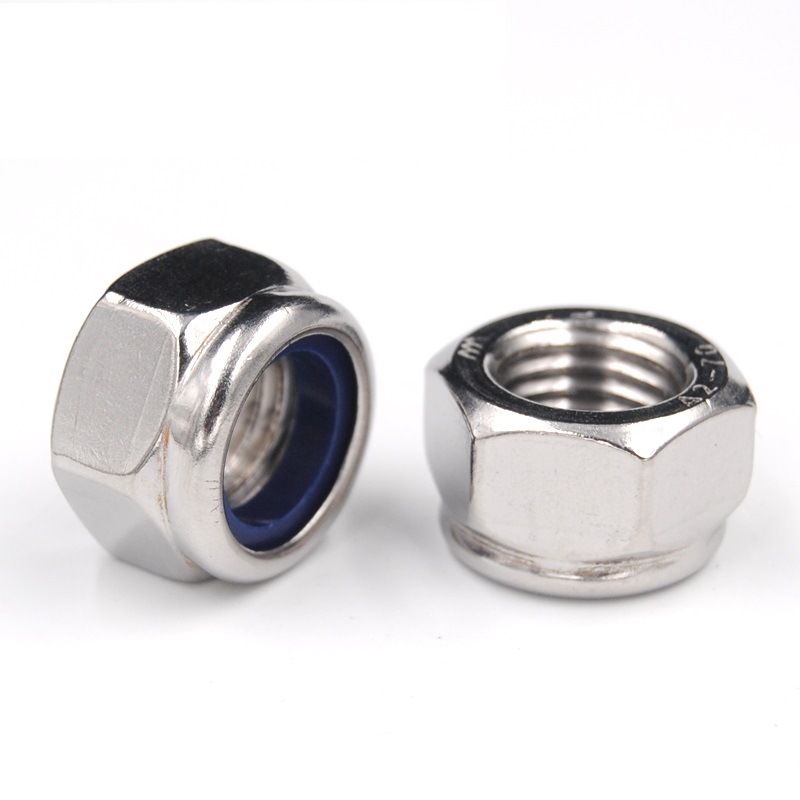
Engineering teams and procurement departments frequently encounter a frustrating friction point during assembly planning. They struggle to specify fasteners correctly when legacy terminology, outdated vendor catalogs, and regional workshop phrasing clash on the manufacturing floor. You will commonly see widespread confusion between a "lock nut" and a "stop nut" across typical Bills of Materials (BOMs). While professionals often use these terms interchangeably, your critical engineering focus must remain firmly on the actual mechanism of the fastener, not just its name. A wrong assumption here can compromise joint integrity and lead to costly field failures. This comprehensive guide will resolve the terminology overlap once and for all. We will provide a direct, actionable evaluation framework to help you select the precise anti-vibration fastening solution your specific application demands.
Key Takeaways
Terminology alignment: A "stop nut" is generally just a colloquial or legacy term for a lock nut (often specifically referring to an elastic/nylon insert nut). Industrially, they refer to the same category of fastener.
The real decision: The procurement choice isn't between a lock nut and a stop nut; it is evaluating a nylon lock nut against an all-metal lock nut.
Performance thresholds: Selection must be dictated by operating temperature, vibration severity, and maintenance/reusability requirements.
Assembly risks: Factoring in prevailing torque and mitigating thread galling are essential for successful production rollouts.
Clarifying the Terminology: Is There a Technical Difference?
You must establish a clear vocabulary to manage fastener procurement effectively. The industry-standard umbrella term is the lock nut. This category covers any nut designed to resist loosening under dynamic loads. They handle constant vibration far better than standard hex nuts. Manufacturers divide them into two primary categories. You have prevailing torque types and surface-bearing types. Prevailing torque designs use internal thread friction to maintain their position. Surface-bearing designs rely on serrated bottom faces. These serrations bite into the joint material to prevent rotation.
Where does the alternative phrasing originate? The "stop nut" moniker has distinct historical roots. Today, it is largely synonymous across industrial sectors. However, it stems directly from legacy brand names. The Elastic Stop Nut Corporation of America (ESNA) popularized these fasteners decades ago. Regional workshop terminology also kept the phrase alive. Many experienced mechanics still request a stop nut. They simply mean a nut capable of holding its position on a bolt.
This overlapping vocabulary creates a complex procurement reality. Suppliers will almost always fulfill a "stop nut" request by sending you a standard prevailing torque fastener. Ambiguous nomenclature hurts engineering precision. It delays quote processing. Buyers should transition their BOMs immediately. You must specify the exact locking mechanism needed. Stop relying on outdated names. The debate between a lock nut and stop nut is purely semantic. Your engineering focus belongs entirely on material properties and friction mechanics.
Framing Your Fastener Problem: Why Standard Hex Nuts Fail
Standard hex nuts rely entirely on axial tension to hold a joint together. They fail quickly when external forces overcome this clamping tension. We see significant business impacts when this happens. Fastener failure leads directly to equipment downtime. You face mounting warranty claims. Safety compliance breaches also become a severe operational risk. Every dropped bolt introduces massive liability.
You must understand the physics behind joint loosening. Transverse vibration acts as the primary enemy. It shifts the joint materials sideways. This microscopic sliding causes standard thread clearances to slip. The nut momentarily loses friction against the bolt threads. It rotates backward slightly during this momentary slip. The clamp load drops rapidly. Soon, the joint fails completely.
The standard failure process usually follows these three distinct stages:
Initial slip: Transverse forces overcome joint friction between the mating surfaces.
Thread unwinding: The nut backs off incrementally under continued vibration.
Total separation: Clamp load reaches zero. The fastener disengages entirely.
This physical reality demands a much stronger mechanical solution. Introducing a prevailing torque mechanism provides immense justification. It prevents the nut from spinning freely. This design acts as a standard compliance requirement across many demanding sectors. Automotive assembly relies heavily on them to secure suspension components. Agriculture machinery cannot survive rugged fields without them. Heavy manufacturing mandates their use for overhead crane safety. We need fasteners capable of holding firm despite constant shaking.
The Real Specification Choice: Nylon Lock Nut vs. All-Metal Lock Nut
You now understand the basic terminology. We can move past the legacy naming conventions. The actual procurement choice requires careful technical evaluation. You are really evaluating two distinct prevailing torque designs. Let us examine how they achieve their friction grip.
Nylon Lock Nut (The "Elastic Stop Nut")
Engineers often call this specific variant the elastic stop nut. It features a brilliant, highly effective mechanism. It contains a captive undersized polymer ring. This nylon insert sits securely at the top of the nut. As you drive the bolt through, the threads cut into the polymer. The nylon ring deforms elastically. It squeezes tightly over the mating threads. This radial pressure forces the metal threads together on the opposite flank. It provides a constant, reliable friction grip.
You must place them in ideal applications to ensure success. They thrive in environments experiencing moderate vibration. The nylon also offers an excellent secondary benefit. It creates a highly effective moisture and gas seal against the threads. This prevents fluid ingress along the bolt path. However, operating temperatures strictly dictate their limits. You must keep ambient temperatures strictly below 250°F (120°C). Extreme heat melts the polymer insert. It destroys the locking capability instantly.
The commercial benefit remains very strong. A nylon lock nut is highly cost-effective to produce. They suit high-volume assemblies perfectly. Low-heat applications benefit greatly from their cheap unit price. They protect your profit margins during mass production.
All-Metal Lock Nut (Stover, Top Lock, Distorted Thread)
This alternative discards polymer components entirely. You might know them commonly as Stover nuts or top lock nuts. Their mechanism relies purely on steel geometry. Manufacturers create them with mechanically distorted threads. They usually warp the top threads slightly out of round. Driving a perfectly round bolt through these distorted threads requires deliberate force. This creates a tight, metal-on-metal friction fit.
They suit completely different ideal applications. You need them for extreme environments. Heavy machinery subjected to crushing vibration requires this structural strength. They are absolutely mandatory for applications exceeding 250°F. Steel does not melt under standard industrial exhaust temperatures. They hold secure near furnaces and engine blocks.
Their commercial benefit focuses strictly on durability. An all-metal lock nut is practically indestructible. They survive harsh chemical baths without damage. Extreme heat cycles do not compromise them. They lack any degrading polymer insert. You get pure mechanical reliability under the worst conditions.
Evaluation Criteria for Procurement and Engineering
Selecting the correct variant requires rigid criteria. We built a framework to guide your final choice. You must weigh these technical factors carefully.
First, check your operating temperature limits. This forms a strict binary cutoff for engineers. If the application environment exceeds 250°F (120°C), stop immediately. Nylon is disqualified from consideration. Metal becomes your only viable path. Engine bays and industrial ovens demand metal solutions.
Next, evaluate your reusability and maintenance routines. Nylon lock nuts lose significant locking ability after their first installation. The polymer threads tear permanently during removal. You should ideally replace them during every maintenance cycle. Industry standards suggest single-use for critical joints. All-metal versions behave differently. They retain prevailing torque slightly better across multiple uses. However, thread wear remains a real concern. You must monitor them closely for metal fatigue.
Chemical and environmental exposure demands careful review. Solvents can degrade nylon rapidly. Prolonged UV light exposure weakens polymer integrity over time. Metal fasteners rely purely on their plating or alloy. Zinc-plated steel resists basic corrosion well. Stainless steel handles aggressive marine environments beautifully. You must match the fastener material to the surrounding chemical hazards.
Finally, consider scalability and unit cost. We recommend comparing marginal cost differences at high volumes. Nylon parts generally cost less to manufacture. Plastic injection molding scales cheaply. You must balance this upfront saving against warranty risks. High-stress applications punish weak joints. Spending slightly more on metal upfront prevents expensive field failures later. Protect your brand reputation by choosing adequate holding power.
Fastener Selection Decision Matrix
Application Factor
Nylon Insert Type
All-Metal Type
Max Temperature
Under 250°F (120°C)
High (Matches base metal limits)
Vibration Resistance
Moderate to High
Extreme / Severe
Chemical Resistance
Vulnerable to acids/solvents
High (Depends on alloy/plating)
Thread Sealing
Yes (Blocks fluids/gases)
No (Allows fluid passage)
Reusability
Poor (Single-use recommended)
Fair (Limited cycles allowed)
Implementation Realities and Assembly Risks
Choosing the right nut only solves half the problem. Installation introduces entirely new engineering challenges. You must manage these production line variables carefully to ensure joint integrity.
Managing thread galling represents a critical risk. It happens frequently with all-metal styles. Stainless steel rubbing tightly against stainless steel causes severe friction. This friction removes the protective oxide layer on the metal. The threads can literally cold-weld together during assembly. You must recommend anti-seize lubricants to your line workers. Specific plating choices also prevent cold welding. Adding a zinc-flake coating mitigates galling risks significantly.
You also need to prioritize adjusting torque calculations. Standard torque-tension charts do not apply here. Engineers must account for the prevailing torque mathematically. This refers to the friction generated by the locking feature itself. You must add this rotational resistance to your baseline torque spec. This ensures you achieve the correct final clamping force. Failing to adjust this leaves joints dangerously loose.
Torque Adjustment Example Summary
Metric
Standard Nut
Prevailing Torque Nut
Run-down Resistance
Near zero (Spins freely)
High (Requires wrenching)
Target Clamp Load Torque
40 Nm
40 Nm
Required Tool Setting
40 Nm
40 Nm + Prevailing Torque Value
Production line tooling requires strict auditing. High-speed pneumatic tools spin fasteners incredibly fast. They generate massive amounts of friction heat. This heat can melt a nylon insert in seconds. It can instantly gall an all-metal nut onto a bolt. We strongly outline the need for RPM-controlled tooling. Slower, controlled rundown speeds protect the fastener integrity.
Follow these assembly best practices for prevailing torque fasteners:
Measure prevailing torque on a sample batch before full production starts.
Add the measured rotational resistance to your target seating torque.
Calibrate electric or pneumatic tools to lower RPM settings.
Apply anti-seize paste to stainless steel assemblies to prevent cold welding.
Never substitute an all-metal nut with a nylon variant in high-heat exhaust zones.
Conclusion
We must conclude by reinforcing the terminology facts. A "lock nut" and a "stop nut" simply represent two different names for the exact same fastening solution. Your actual engineering focus should center on material selection and environmental conditions. You must choose between nylon and metal mechanisms based on heat, vibration, and chemical exposure.
We encourage procurement buyers and engineers to audit their current fastening applications immediately. Review your BOMs based on heat constraints and vibration risks. Contact your sales or engineering team to request physical samples. You should torque-test these samples directly on your production line. Proper validation ensures your final product remains safe, compliant, and durable.
FAQ
Q: Which direction does a nylon lock nut or stop nut go on?
A: The side with the nylon insert or distorted thread always faces outward. It must point away from the joint surface. You thread the flat, standard side onto the bolt first. This ensures the bolt engages the standard threads before hitting the locking mechanism.
Q: Can you reuse a lock nut?
A: Technically yes for a very limited number of cycles. However, industry best practices and aviation/automotive safety standards dictate single-use for critical joints. Nylon inserts tear during removal. Metal threads fatigue. Replacing them guarantees maximum holding power.
Q: Do I need to use a lock washer with a lock nut?
A: Generally no. Stacking multiple locking mechanisms is highly redundant. It can lead to unpredictable torque values during installation. Using a lock washer defeats the entire purpose of specifying a prevailing torque nut in the first place.