In structural fastening systems, not all nuts are created equal. Projects involving steel structures, heavy equipment, infrastructure, and high-strength bolted connections require fastening components that provide reliable load distribution, durability, and safety margins. This is where the heavy hex nut plays a critical role.
From our experience working with customers across construction, energy, transportation, and heavy industry, the question “What is a heavy hex nut?” is often the starting point for understanding structural bolting systems. A heavy hex nut is not simply a larger nut — it is an engineered fastening component designed to handle higher loads, provide improved thread engagement, and meet strict structural standards. Understanding its design, applications, and advantages helps engineers and buyers choose the right fastening solution for demanding environments.
Definition of a Heavy Hex Nut
A heavy hex nut is a hexagonal nut that is thicker and wider across flats than a standard hex nut of the same nominal diameter. This increased size allows for:
Greater thread engagement
Improved load distribution
Higher strength compatibility
Better performance in structural applications
Heavy hex nuts are commonly used with high-strength bolts in steel structure connections.
Heavy Hex Nut vs Standard Hex Nut
The main difference lies in dimensions and performance.
Feature | Heavy Hex Nut | Standard Hex Nut |
Thickness | Thicker | Thinner |
Width across flats | Larger | Smaller |
Load capacity | Higher | Moderate |
Structural use | Yes | Limited |
Typical applications | Steel structures | General fastening |
Because of these dimensional differences, heavy hex nuts are more suitable for high-strength bolted joints.
Why Heavy Hex Nuts Are Used
Heavy hex nuts are specifically designed to meet the demands of structural fastening applications where reliability, strength, and safety margins are essential. Compared with standard hex nuts, their larger geometry provides improved load distribution and stronger thread engagement, making them suitable for high-strength bolted connections.
Key reasons heavy hex nuts are used include:
Compatibility with high-strength bolts used in structural systems
Improved clamping force stability under static and dynamic loads
Reduced risk of thread stripping due to greater engagement length
Better performance in vibration-prone environments
Enhanced safety margins for critical connections
Because structural joints often carry significant loads over long service periods, fastening components must maintain consistent preload. Heavy hex nuts help ensure this stability, which is why they are widely specified in construction standards and engineering projects.
Materials Used in Heavy Hex Nuts
Material selection plays a major role in determining mechanical strength, corrosion resistance, and long-term performance. Different applications require different material characteristics depending on load levels and environmental exposure.
Common materials include:
Carbon steel — widely used for structural fastening due to balanced strength and cost efficiency
Alloy steel — selected for high-strength applications requiring improved mechanical properties
Stainless steel — provides corrosion resistance in harsh or outdoor environments
Hot-dip galvanized steel — commonly used in infrastructure and steel structures exposed to weather
The choice of material depends on several factors, including design load, installation environment, expected service life, and compatibility with bolt grades. In many structural projects, coating selection is closely linked to material choice to ensure consistent performance.
Standards and Specifications
Heavy hex nuts are typically manufactured according to recognized structural standards to ensure dimensional accuracy and mechanical reliability. Compliance with standards allows nuts to work correctly with corresponding bolts and ensures predictable performance in engineering applications.
Examples include:
Standard Type | Typical Use |
Structural bolt systems | Steel structure connections |
High-strength bolting standards | Bridges and infrastructure |
ASTM / ISO equivalents | Global industrial applications |
These standards define critical parameters such as dimensions, thread tolerances, strength grades, and testing requirements. Adhering to standardized specifications ensures interchangeability, simplifies design approval, and improves project safety.
Typical Applications
Heavy hex nuts are widely used in industries where fastening reliability is essential and connection failure is not acceptable.
Steel Structure Buildings
Primary structural connections require consistent clamping force to maintain alignment and load transfer across beams, columns, and joints.
Bridges and Infrastructure
Large loads, environmental exposure, and vibration demand robust fastening solutions that can maintain preload over time.
Heavy Industry Equipment
Industrial machinery, frames, and support structures rely on durable bolted joints capable of handling dynamic stress.
Energy and Power Projects
Wind turbines, oil and gas installations, and power generation facilities use structural fasteners designed for long service life and high safety requirements.
These applications highlight the importance of heavy hex nuts in maintaining structural integrity.
How Heavy Hex Nuts Improve Structural Performance
The geometry of heavy hex nuts provides several engineering advantages that directly influence joint performance.
Key benefits include:
A larger bearing surface that reduces stress concentration on connected components
Increased thickness that improves thread engagement and load capacity
Higher preload capability supporting stronger clamping force
Improved load transfer across joint interfaces
By distributing forces more effectively, heavy hex nuts help prevent localized stress and reduce the likelihood of joint loosening. This contributes to improved structural stability and long-term reliability.
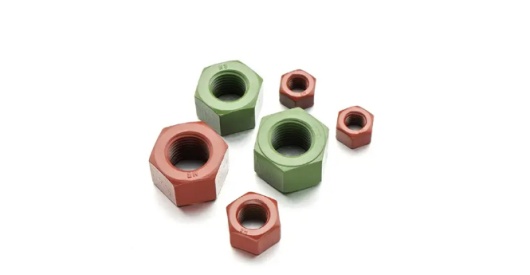
Load Distribution and Safety
Structural bolting relies heavily on controlled preload — the clamping force created during tightening. Maintaining consistent preload is essential for connection safety, especially in high-load structures.
Heavy hex nuts support this by enabling:
More uniform preload across the joint
Reduced loosening risk under vibration and cyclic loading
Improved fatigue performance of bolted connections
Higher overall connection reliability
In safety-critical structures such as bridges, towers, and industrial facilities, these benefits significantly reduce the risk of structural failure.
Surface Treatments and Protection
Surface finishing plays an important role in protecting heavy hex nuts from environmental damage and extending service life. Corrosion can compromise both strength and thread performance, making protective treatments essential.
Common surface treatments include:
Hot-dip galvanizing — provides thick corrosion protection for outdoor structural applications
Zinc plating — offers moderate corrosion resistance and a clean finish
Mechanical galvanizing — improves coating consistency while preserving thread fit
Black oxide — used where appearance and light corrosion protection are required
Specialized coatings — designed for chemical resistance or enhanced durability
Selecting the correct surface treatment depends on environmental exposure, installation requirements, and project specifications. Proper protection ensures that heavy hex nuts maintain mechanical performance throughout their service life while supporting safe and reliable structural fastening.
Selection Considerations
Choosing the correct heavy hex nut involves several factors:
Bolt grade compatibility
Required strength class
Environmental exposure
Coating requirements
Installation method
Proper selection ensures long-term performance.
Installation Best Practices
Correct installation is essential.
Recommendations include:
Matching nut and bolt grades
Using proper torque procedures
Avoiding thread contamination
Following structural specifications
Inspecting preload where required
Installation quality directly affects connection safety.
Common Misconceptions
“Heavy hex nuts are only larger nuts”
They are engineered for structural performance.
“Any nut can replace a heavy hex nut”
Structural standards require specific dimensions.
“Strength depends only on material”
Geometry and thread engagement are equally important.
Why Heavy Hex Nuts Matter in Modern Construction
Modern projects increasingly rely on standardized structural fastening systems. Heavy hex nuts support these systems by ensuring consistent performance under high loads, vibration, and environmental exposure.
As structures grow larger and safety requirements become stricter, heavy hex nuts remain a fundamental component of reliable bolted connections.
Our Engineering Perspective
In our work with customers across heavy industry and steel structure construction, we see that fastening reliability often determines overall structural performance. Selecting the correct heavy hex nut specification helps prevent connection failure, reduces maintenance, and supports long-term safety.
Rather than focusing only on dimensions, we encourage evaluating application conditions, load requirements, coating needs, and standard compliance when choosing structural fasteners. This approach leads to more reliable results.
Conclusion
So, what is a heavy hex nut? It is a structural fastening component specifically designed to provide higher strength, improved thread engagement, and reliable load distribution compared with standard hex nuts. Its larger geometry and compatibility with high-strength bolts make it essential in steel structures, infrastructure, heavy equipment, and energy projects.
Heavy hex nuts play a critical role in ensuring joint stability, maintaining preload, and supporting safe structural performance over time. As construction and industrial requirements continue to evolve, the importance of standardized high-strength fastening solutions becomes even more evident.
At Ningbo Topbolt Metalworks Co., Ltd., we focus on supporting customers with heavy hex nut solutions that align with structural standards, application requirements, and long-term reliability goals. By combining material expertise, manufacturing consistency, and application understanding, we help ensure fastening systems perform as expected. If you are evaluating heavy hex nut specifications or planning structural projects, learning more about available options and discussing your application needs with our team can be a valuable next step.
FAQ
1. What is a heavy hex nut used for?
Heavy hex nuts are used in structural bolting systems such as steel structures, bridges, and heavy equipment.
2. Are heavy hex nuts stronger than standard hex nuts?
They provide better load distribution and thread engagement, making them more suitable for high-strength applications.
3. What materials are heavy hex nuts made from?
Common materials include carbon steel, alloy steel, stainless steel, and galvanized steel.
4. Why are heavy hex nuts important in steel structure connections?
They help maintain preload, improve joint reliability, and support high-strength bolt performance.


