Manufacturing and maintenance teams constantly balance operational efficiency against assembly reliability. You might wonder how far you can push a standard fastener before it fails. Reusing basic hardware saves negligible immediate costs. However, it introduces immense hidden liabilities if the joint ultimately fails under stress.
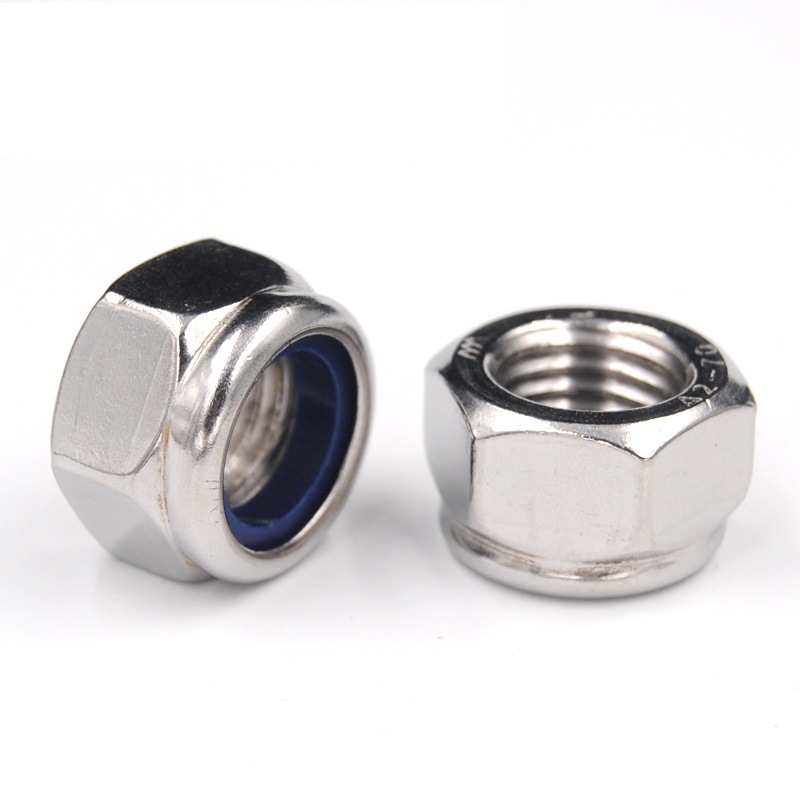
Nylon insert lock nuts, commonly called nyloc nuts, rely strictly on plastic deformation to secure joints against vibration. Every single installation and removal cycle degrades this vital locking mechanism. This gradual degradation steadily raises the risk of a catastrophic mechanical failure.
This article provides engineers, maintenance crews, and procurement professionals with a definitive, evidence-based framework. You will learn how to properly evaluate fastener retention capability. We will explain how testing works and help you determine exactly when replacement becomes an absolute mandatory requirement for your specific applications.
Key Takeaways
Strict Compliance Limits: In aerospace, automotive safety, and high-vibration structural applications, nylon lock nuts are strictly single-use.
The Finger-Tight Rule: If a used nyloc nut can be threaded past the nylon insert by hand without tools, its locking capability is compromised and it must be discarded.
Prevailing Torque is the Metric: Reusability in non-critical applications depends entirely on maintaining acceptable prevailing torque during re-installation.
Cost-to-Risk Ratio: The cost of a replacement lock nut is statistically zero compared to the cost of catastrophic joint failure, equipment damage, or liability.
The Mechanics of Nylon Insert Wear During Installation
Understanding how a nyloc nut functions helps us grasp why they eventually fail. The fundamental design relies on a specialized collar. Manufacturers integrate a small nylon ring into the top of the nut. This collar has a slightly smaller inner diameter than the mating bolt threads.
When you install the nut, the bolt threads must forcefully push through this tight collar. The steel bolt physically cuts its way into the softer nylon material. This cutting action creates intense compressive friction. This specific friction grips the bolt tightly and successfully resists loosening from vibration.
However, we must address the harsh reality of nylon insert wear. The engineering principle at play here is plastic deformation. Unlike metal springs, nylon does not possess infinite elastic memory. It cannot bounce back completely to its original shape.
Upon initial installation, the nylon yields to accommodate the bolt. When you back the bolt out during removal, the cut threads inside the nylon tear. They stretch significantly. The collar permanently loses its original volumetric resistance. The plastic material simply pushes out of the way.
Each subsequent reuse forces the bolt into already-damaged grooves. The nylon no longer grips the steel with the same compressive force. The vibration resistance drops drastically after just one removal.
Environmental factors heavily influence this degradation process as well. Heat cycling accelerates nylon breakdown. Standard commercial nylon begins softening at relatively low temperatures. Chemical exposure causes similar damage. Oils, solvents, and cleaning agents degrade the polymer chains. These harsh environmental realities make fastener reuse significantly riskier in industrial settings.
Can Nylon Lock Nuts Be Reused? Industry Standards vs. Reality
Many technicians ask, can nylon lock nuts be reused safely? The answer depends entirely on your specific industry sector and the assembly application. We must separate strict compliance standards from everyday commercial realities.
Aerospace and critical infrastructure sectors enforce intense single-use strictness. You will find standard aviation maintenance procedures clearly outlined in documents like the FAA AC 43.13-1B. These guidelines explicitly classify nyloc nuts as single-use consumables. Military maintenance protocols mirror these exact same rules.
The framing for this strictness revolves around pure liability and safety. If a fastener vibrates loose on a helicopter rotor, the result is catastrophic. Therefore, compliance regulations dictate an absolute zero-tolerance policy for reuse. You must discard them immediately after removal.
Commercial and non-critical manufacturing environments adopt a slightly different approach. They often allow conditional reuse. You might secure a simple bracket on a stationary desk. You might assemble a low-vibration electronics enclosure. In these specific non-safety-critical assemblies, some engineering guidelines permit minimal reuse. Technicians often cite a limit of one to three reuses.
However, we must emphasize a crucial caveat here. This conditional reuse is only acceptable if technicians meet strict inspection criteria during reassembly. You cannot simply guess if the nut remains functional. You must prove it through physical evaluation. Blindly reusing fasteners without testing leads directly to unpredictable mechanical failures down the line.
The "Prevailing Torque" Test: Evaluating Fastener Integrity
If you decide to reuse a nyloc nut in a non-critical application, you need a reliable testing metric. We define this metric as prevailing torque. Many people confuse this term with seating torque. They are entirely different concepts.
Prevailing torque measures rotational resistance. It represents the specific amount of force required to turn the nut down the thread. You must measure this resistance before the nut clamps against the mating surface. It strictly measures the friction between the nylon collar and the bolt threads.
We provide a clear evaluation framework to test this integrity properly. Follow these three testing steps carefully:
Visual Inspection: Always start by looking closely at the hardware. Check for extruded or torn nylon sticking out of the top. Look for missing nylon chunks. Inspect the metal threads for stripping or galling. Discard any visibly damaged parts immediately.
The "Finger" Test: Thread the used nut onto your bolt. Spin it down manually. Once the bolt threads reach the nylon ring, the friction should spike. It should become impossible to turn by bare fingers. If the nut spins freely through the nylon section, it has failed completely. You must throw it away.
Torque Wrench Verification: Precision assemblies require exact measurements. You cannot rely on feel alone. Measure the turning resistance using a calibrated dial torque wrench. Compare your reading against the minimum prevailing torque specifications for that exact thread size and material grade. If the reading falls below the minimum threshold, the locking feature is dead.
Engineers rely on this specific test because it eliminates guesswork. It provides objective data. You know instantly whether the plastic deformation has ruined the locking capability.
Decision Framework: When to Discard and Choose a Replacement Lock Nut
Facilities need a standardized approach to fastener management. Without rules, technicians make inconsistent choices. We recommend categorizing your assembly risk to streamline these daily decisions.
First, identify your High-Risk assemblies. These involve heavy vibration or direct safety implications. Examples include automotive suspension components, heavy engine mounts, industrial lifting machinery, and overhead lighting fixtures. The action here is simple. Always replace the fastener. Never attempt reuse.
Second, identify your Low-Risk assemblies. These involve static loads or simple enclosures. Examples include stationary mounting brackets, lightweight casing covers, or temporary manufacturing jigs. The action here allows flexibility. You may inspect the hardware and conditionally reuse it if it passes the prevailing torque test.
You must constantly perform a basic cost-benefit analysis. We contrast the micro-cost of a fresh replacement lock nut against the macro-cost of systemic failure. A new fastener costs mere pennies. A warranty claim costs thousands of dollars. A mechanical breakdown halts production lines. A safety incident ruins corporate reputations.
You must standardize your maintenance protocols to ensure compliance. Advise your procurement and facility managers accordingly. They need to stock sufficient replacement hardware at all workstations. Technicians often reuse compromised nuts simply because they face inventory shortages. They do not want to walk across the warehouse for a ten-cent part. If you keep replacement parts easily accessible, you eliminate this dangerous temptation entirely.
Upgrading Your Fastener Strategy for High-Cycle Assemblies
Some engineering designs require frequent maintenance. You might have a specific joint requiring constant disassembly and reassembly. In these scenarios, replacing a nyloc nut every single day becomes economically tedious and operationally frustrating.
If you face this issue, you must evaluate alternative fastening solutions. Nylon is simply the wrong material for high-cycle applications. We recommend several robust alternative solution categories.
All-Metal Lock Nuts: Consider upgrading to Stover nuts or Aerotight nuts. These utilize distorted metal threads to create friction. They handle high temperatures effortlessly. They offer better reusability rates for repetitive tasks. However, they do cause slight wear on the mating bolt threads over time.
Wedge-Locking Washers: Products like Nord-Lock washers use advanced mechanical tension rather than basic friction. They feature interlocking cams. They remain highly reusable across thousands of cycles. They provide superior vibration resistance without degrading mating threads.
Drilled Heads with Safety Wire: This represents the ultimate failsafe technique. You drill a hole through the fastener head. You route stainless safety wire through it and anchor it nearby. It physically prevents rotation. Aviation mechanics use this extensively for critical, high-vibration environments where absolute security is non-negotiable.
Choosing the right strategy minimizes downtime. You stop worrying about degrading plastic rings. You implement systems designed specifically for repeated access.
Conclusion
While technically possible in low-risk scenarios, reusing nylon lock nuts remains generally poor engineering practice. We attribute this to the irreversible nature of plastic insert wear. Once the nylon yields to the bolt threads, it permanently loses its optimal gripping capability.
You must establish clear facility rules to prevent arbitrary decision-making on the shop floor. Adopt simple mantras like, "When in doubt, throw it out." Ensure your procurement lines stay fully optimized. Supply your teams with high-quality, fully traceable replacement fasteners at all times. Prioritize structural integrity and safety over saving fractions of a cent on compromised hardware.
FAQ
Q: How many times can you reuse a nylon insert lock nut?
A: In non-critical applications, general consensus allows 1-3 reuses, provided it passes the prevailing torque test. In critical/safety applications, the answer is always zero. You must discard them immediately to maintain strict compliance and prevent catastrophic failures.
Q: Does temperature affect the reusability of a nyloc nut?
A: Yes. Standard nylon degrades rapidly above 250°F (121°C). If a nut has been exposed to high heat, the nylon hardens permanently. It loses its locking capability entirely. You cannot reuse heat-cycled nyloc nuts; they require immediate replacement.
Q: Can I use threadlocker (Loctite) on a used nylon lock nut?
A: It is not recommended. Threadlocker chemicals can degrade the soft nylon material further. A worn nyloc nut paired with chemical threadlocker acts unpredictably. It serves as a poor substitute for a fresh, properly specified fastener in any serious assembly.